


From data to decision, from decision to impact
In a rapidly evolving healthcare landscape, data has become the cornerstone of better decision-making, innovation, and patient outcomes.
In healthcare today, data has become one of our most valuable assets. From electronic health records and genomic research to real-time monitoring through wearables, the amount of information available is unprecedented. Yet the real challenge lies not only in collecting data, but in transforming it into meaningful insights that support clinicians, empower patients, and improve outcomes. This year’s IESE Healthcare Industry Meeting will explore how healthcare systems can move from fragmented information to actionable knowledge, laying the groundwork for better care.
Better use of data opens the door to more accurate diagnoses, earlier interventions, and truly personalized treatments. But it also raises questions of trust, governance, and responsibility. How can we ensure that interoperability works across systems? What role should regulation and ethical frameworks play in balancing innovation with privacy? And how can healthcare leaders leverage data to achieve greater efficiency while keeping patients at the center? How can we facilitate the public-private collaboration to create the best possible health ecosystem? These are some of the debates we will bring to the forefront.
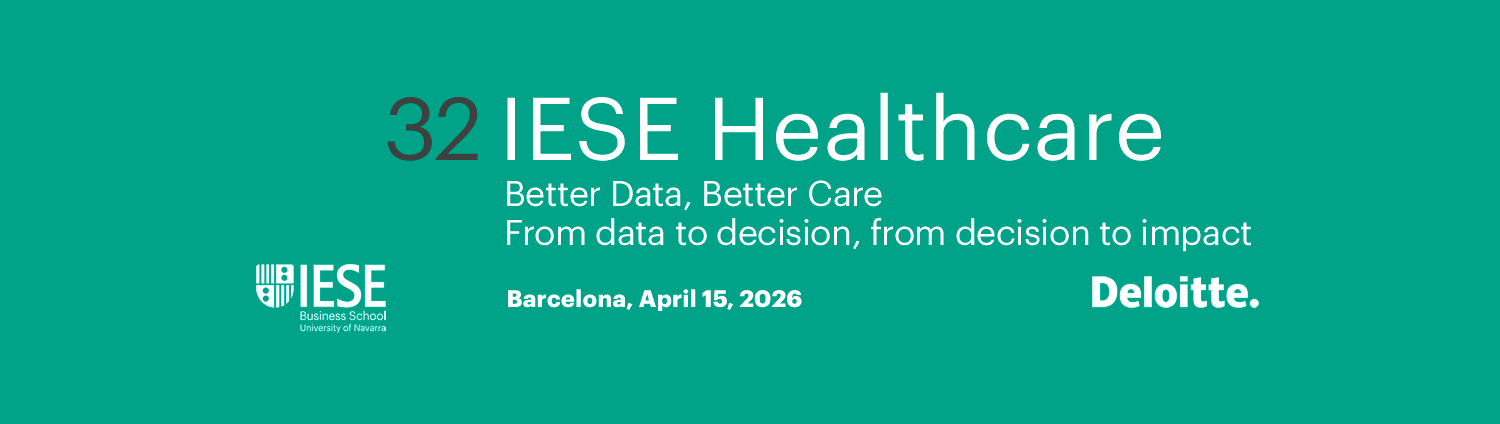
The 32nd IESE Healthcare Industry Meeting, in collaboration with Deloitte, under the theme “Better Data, Better Care,” will examine how healthcare systems can unlock the full potential of data to deliver safer, more efficient, and more personalized care, and ultimately, build the foundations for healthier societies. By harnessing data wisely, we can design more sustainable healthcare systems, empower professionals with the tools they need, and give patients greater confidence in the care they receive.
Building on last year’s focus on AI, this year’s meeting will bring together global leaders from across the healthcare ecosystem — clinicians, policymakers, researchers, and industry executives — to debate how to transform data into actionable insights, foster collaboration between public and private sectors, and strengthen trust in digital health, and taking into account the growing impact of agentic AI in clinical practice and across the sector. Through dynamic panels and interactive discussions, participants will explore the opportunities and challenges of a data-driven future, and how better information can ultimately mean better health for all.

| 08:30-09:00 | Registration |
| 09:00-09:25 | Opening
• Prof. Núria Mas, Academic director of the Meeting, Jaime Grego Chair of Healthcare Management, IESE Business School |
| 09:30-10:00 | Geoeconomic Outlook. Implications for healthcare
• Prof. Núria Mas, IESE Business School |
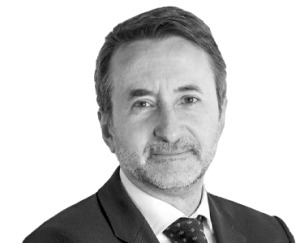
| 10:05-10:35 | Conversation with Jonathan Larsen
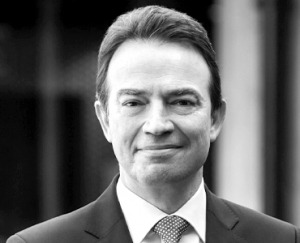
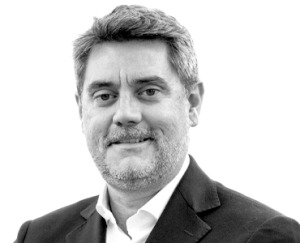
With Jonathan Larsen, Chief Innovation Officer, Ping An Group, one of the most innovative financial group in China and one of the largest insurance companies in the world, we will discuss how AI and Data are transforming healthcare systems and how can we turn data to value. We will talk about how we can create health technology ecosystems and how we can think about “operating in a world where data is our raw material”. • Jonathan Larsen, Chief Innovation Officer, Ping An Group Moderator: Prof. Núria Mas, IESE Business School |
| 10:35-11:05 | Coffee Break |
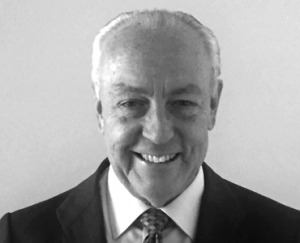
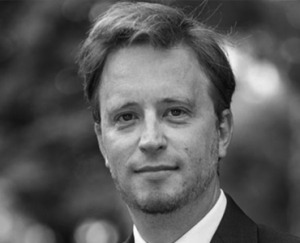
| 11:05-12:15 | New Zealand Healthcare System Transformation
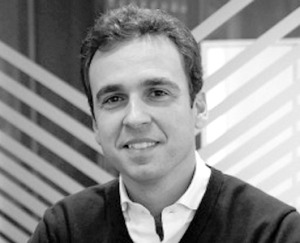
We will welcome Lester Levy CNZM, a truly standout global voice in healthcare leadership. As Professor of Digital Health Leadership at Auckland University of Technology and Chair of Health New Zealand, Levy has spent his career driving bold, transformative change across health systems. In this session, he will reveal how public–private collaboration can become a powerful catalyst for modernizing national healthcare systems. We’ll dive into strategic partnerships, breakthrough leadership models, and the cross‑sector collaboration that is reshaping Health New Zealand. With his unique perspective and hands‑on experience, Levy will show how strong leadership and integrated approaches can unlock deep, sustainable, system‑wide transformation—setting a new standard for what the future of healthcare can be. • Lester Levy, Chair of Health New Zealand (online intervention) Moderator: Iñaki Moreno, Partner, Deloitte España |
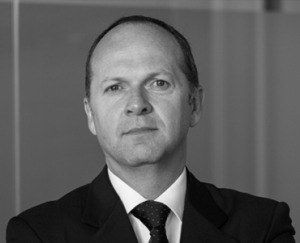
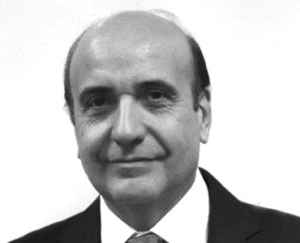
| 12:20-13:20 | From Data to delivery: Evolving toward hybrid care models
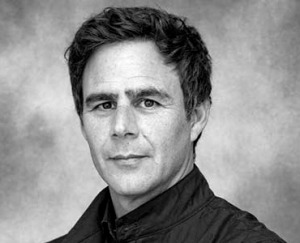
In an era of exponential data growth, the ability to transform health data into meaningful, actionable decisions is reshaping the future of Healthcare. How can we use data and AI to improve the patient´s well-being? how are data, digital platforms, and new care models reshaping healthcare delivery across the continuum of care? From virtual-first pathways to hospital-at-home and hybrid models, the discussion will focus on how data and technology can be translated into real operational and clinical impac innovators? How can we ensure interoperability, security, and ethical use of health data while maximizing its value? • Carlos Nueno, President, Teladoc Moderator: Prof. Núria Mas, IESE Business School |
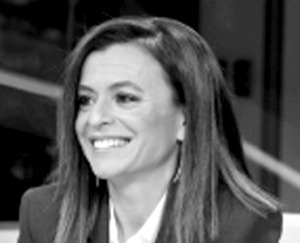
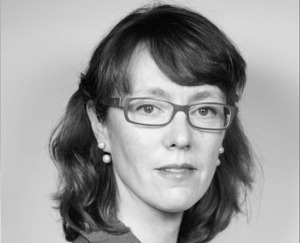
| 13:25-13:55 | Conversation with Noemí Cívicos
• Noemí Cívicos, Digital Health and Information Systems Director, SNS, Spanish Health Government Moderator: Jorge Martinez Roldan, Deloitte |
| 13:55-15:10 | Networking Lunch |
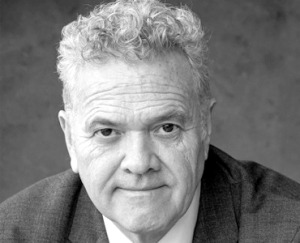
| 15:10-16:10 | Data Quality, Data Value -What Makes Health Data Truly Useful?
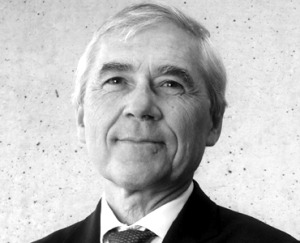
As healthcare systems generate unprecedented volumes of data, the key challenge is no longer access, but usability and impact. This panel will examine what differentiates high-quality, actionable data from data that adds little value to clinical decision-making. Through the lenses of data-driven clinical practice and population-scale diagnostic imaging, the discussion will address issues such as data governance, standardization, interoperability, and trust, and how clinicians and institutions can turn data into meaningful insights that improve outcomes and efficiency. • Francesc Garcia Cuyàs, General Manager, IDI Moderator: Prof. Núria Mas, IESE Business School |
| 16:15-16:35 | Coffee Break |
| 16:35-17:45 | Building Trust and Collaboration in Healthcare Data
In a world where data drives innovation, the healthcare sector faces a critical challenge: balancing accessibility with security. This panel will dive into how data ecosystems can revolutionize patient care, the ethical imperatives of data privacy, and the policies needed to foster trust. Join leading voices as they discuss the future of collaboration between researchers, providers, and policymakers to unleash the full potential of healthcare data. • Carlos Jouve, Head of Healthcare Services Spain, Amazon Moderator: Prof. Núria Mas, IESE Business School |
| 17:50-18:35 | Final Thoughts
• Prof. Núria Mas, IESE Business School |
* (TBC) To Be Confirmed.
Note: In case of international speakers, we provide simultaneous translation during the event.

Co-organizer of the Meeting

Speaker

Speaker

Speaker

Speaker

Speaker

Speaker

Speaker

Speaker

Speaker

Speaker

Speaker

Moderator

Speaker

Speaker

Speaker
The 32 IESE Healthcare Meeting will be held on IESE Barcelona
The fees for this meeting:
On Campus: € 1,000
Online: € 400
On Campus: € 900
Online: € 400
On Campus: € 700
Online: Free
PAYMENT MUST BE MADE PRIOR TO PROGRAM ATTENDANCE
We know that knowledge and networking are key to open new doors.
This meeting is a unique opportunity to share ideas, connect with industry leaders
and explore trends that are transforming the world of Healthcare
DON’T BE LEFT OUT
If this is your case, write to Claudia Escobar (cescobar@iese.edu) and tell us about your case
2025 · AI in Healthcare
2024 · Healthcare 2030. Envisioning the next decade
2023 · Home is the new hospital
2022 · Byte-Medicine: the revolution of the convergence of technology and medicine
2021 · Life sciences: the engine for the recovery after COVID-19
2019 · Rising to the Challenge: Healthcare First
2018 · Working for a healthy society
2017 · Building a Sustainable Healthcare Model
2016 · Towards Value-Based Healthcare
2015 · Innovation for the New Healthcare Era
2014 · Propelling Change
2013 · Making Patient-Centric Care Happen
2012 · Value Creation and Value Sharing
2011 · Toward a Change of Model
2010 · The Healthcare Industry in 2020
2009 · Toward a New Model of Industry (Pharma) / Recognizing Value (Healthcare)
2008 · Betting on the Sector (Pharma) / Innovating With Responsibility (Healthcare)
2007 · The Global Opportunity
2006 · Contributing More (Pharma) / The Value of Technology (Healthcare)
2005 · Healing Under Pressure
2004 · Rethinking Health
2003 · Health Technologies and the Management of Health Budgets
2002 · Key Variables for Consideration
2001 · Whither the Spanish Health System?
2000 · The Market for Medical Devices in the European Union
1999 · New Millennium, New Challenges
1998 · Health Reform in Practice: New Ways to Buy and Sell
1997 · Economic Limits of Health Since 1998
1996 · Spanish Health: Reality, Change and Adjustment
1995 · Present and Future
1994 · Building From the Crisis
10 Years After COP21
Looking back at that 2015 Paris meeting, the global energy landscape has changed dramatically. Countries were then classified according to their contribution to greenhouse gas emissions: declining emitters such as the United States and the European Union, growing emitters such as China and India, and countries with low emissions. Today, China leads global emissions by accounting for 32%, thus exceeding the combined emissions of the US, the EU, India and Russia. Although China invests more than any other country in renewable and nuclear energy, it still has an alarming dependence on coal, which is used to generate 61% of its electricity. This reflects an “energy addition” model rather than a true transition.
Electrification is key to the energy transition, but faces major challenges. In Spain, decarbonization of electricity reached 80% in 2024, but electricity consumption has been flat for 20 years and barriers for new consumers are limiting progress. Oil’s share in the primary energy matrix is still locked in at 45%, thus hindering decarbonization goals. Defossilized liquid and gas energy vectors are therefore necessary, i.e., vectors of the same molecules, but that are bio-based or synthetic in origin. The progress made by the operators involved is relevant, but their current social acceptance is merely the result of the lack of competition. Moreover, the future of nuclear power in Spain is uncertain compared to renewed commitments in the United Kingdom and France.
At the global level, the EU finds itself caught between two major powers: the US and China. Thanks to fracking, the US is the world’s largest producer of oil and natural gas, which it exports at competitive prices. Meanwhile, China combines heavy coal use with Russian gas imports, thus ensuring a robust energy supply. This situation places the EU at a disadvantage due to higher energy costs and a reliance on external resources.
However, Spain and Portugal have the potential to lead Europe’s electricity supply, provided they can improve their infrastructure and institutional trust. Nonetheless, events such as the April 2025 blackout and growing institutional distrust cast doubt on such progress.
Climate change remains a pressing challenge that calls for worldwide cooperation. While the EU moves toward achieving carbon neutrality by 2050, many critical technologies are still in early stages of development. Furthermore, events such as the potential weakening of the Gulf Stream system could have devastating consequences. The lack of coordinated action at the international level, especially by major emitters such as the US and China, further complicates the situation.
In this context, the energy transition should not only focus on electrification, but also on defossilization using vectors such as hydrogen and ammonia. History shows that climate has always shaped human development. Addressing this challenge therefore requires urgent, coordinated action.
Some Conclusions
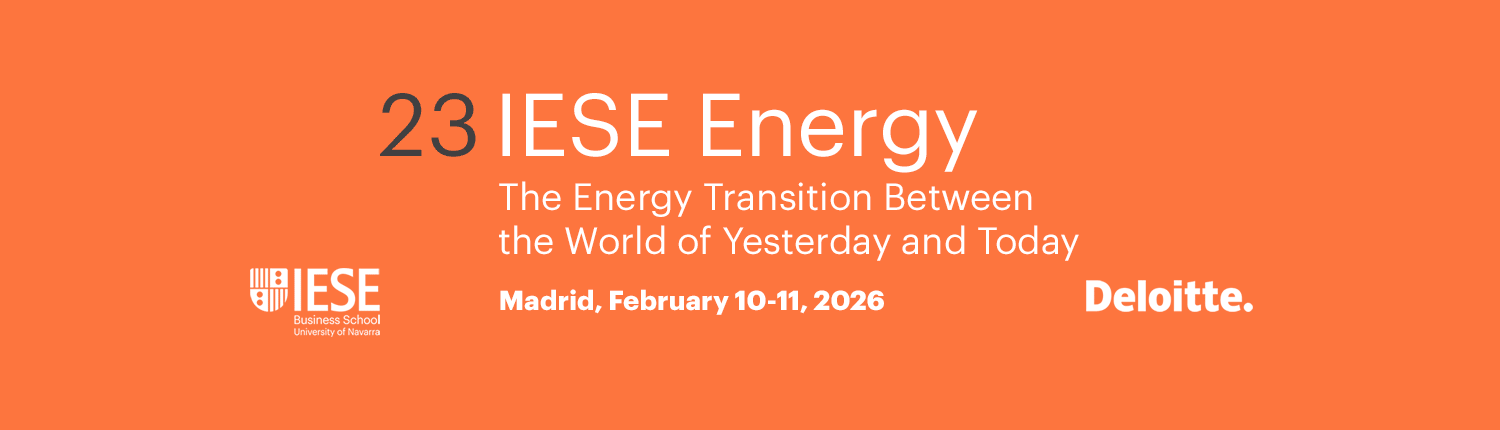
All this will be discussed at our next meeting at 23 IESE Energy at IESE.
| 14:30-15:00 | Registration |
| 15:00-15:40 | Welcome
• Prof. Juan Luis López Cardenete, Academic Director of the Meeting, IESE Business School |
| 15:45-16:15 | Reforms with Impact for an Effective and Competitive Transition (I)
• Josu Jon Imaz, Chief Executive Officer, Repsol Moderated by: Prof. Juan Luis López Cardenete, IESE Business School and Oliverio Álvarez, Deloitte |
| 16:20-17:30 | What is Holding Back Electrification and Demand for Electricity Storage from Moving Forward with the Transition?
• Joaquín Coronado, Chair, Build to Zero Moderated by: Prof. Edi Soler, IESE Business School |
| 17:30-18:00 | Coffee break |
| 18:00-18:30 | Reforms with Impact for an Effective and Competitive Transition (II)
• Francisco Reynés, Executive Chairman, Naturgy Moderated by: Prof. Juan Luis López Cardenete, IESE Business School and Oliverio Álvarez, Deloitte |
| 18:35-19:45 | Disruption in Wholesale and Retail Markets
• Carmen Becerril, President, Omel/Omie Moderated by: Manuel Blanco, Socio, Deloitte |
| 19:50-20:45 | Reforms with Impact for an Effective and Competitive Transition (III)
• Rafael Mateo, Board Member of Acciona Energia, Former CEO Moderated by: Carlos Tallón, Deloitte |
| 08:30-09:00 | Registration |
| 09:00-09:30 | Institutional Welcome
• Prof. Juan Luis López Cardenete, Academic Director of the Meeting, IESE Business School |
| 09:35-10:40 | What barriers hinder the energy transition in transport and industry?
• Luis Cabra, Chief Executive Officer of Energy Transition, Technology, Institutional Affairs, and Deputy CEO, Repsol Moderated by: Prof. Laureano Álvarez, Socio, Deloitte |
| 10:45-11:50 | Reforms with Impact for an Effective and Competitive Transition (IV)
• Javier Goñi, CEO, Exolum Moderated by: Cristina Rivero, Directora General, Enerclub |
| 11:50-12:20 | Coffee break |
| 12:20-13:15 | The Weight of Public and Published Opinion: Is it All for Citizens?
• Rubén Esteller, Deputy Director, elEconomista Moderated by: Prof. Massimo Maoret, IESE Business School |
| 13:20-14:15 | A Unique Opportunity for Spain and Portugal: Are the Pyrenees Energetically Permeable?
• Rodrigo Costa, President and CEO, REN Moderated by: Oliverio Álvarez, Deloitte |
| 14:20-15:15 | A New Multilateral Climate Architecture to Rein in the 10 Largest Emitters?
• Alicia García-Herrero, Chief Economist, Natixis Moderated by: Prof. Juan Luis López Cardenete, IESE Business School |
| 15:15-16:30 | Lunch |
| 16:30-17:20 | The European Union, US and China: A Shared Climate Destiny or Divergent Energy Strategies?
• Enric Juliana, Deputy Director, La Vanguardia Moderated by: Prof. Juan Luis López Cardenete, IESE Business School |
| 17:25-18:35 | The Energy Transition 10 Years after the Paris Summit: What Should Be Changed?
• Luis Atienza, President, Argo Capital Partners Moderated by: Prof. Edi Soler, IESE Business School |
| 18:40-19:10 | Closing and conclusions
• Prof. Juan Luis López Cardenete, Academic Director of the Meeting, IESE Business School |
Note: In case of international speakers, we provide simultaneous translation during the event.

Co-organizer of the Meeting

Moderator

Speaker

Speaker

Moderator

Speaker

Speaker

Speaker

Speaker

Speaker

Speaker

Speaker

Speaker

Speaker

Speaker

Speaker

Speaker

Speaker

Speaker

Speaker

Speaker

Speaker

Speaker

Speaker

Speaker

Speaker

Speaker

Speaker

Moderator

Speaker

Speaker

Speaker

Speaker

Moderator

Speaker

Speaker

Speaker

Speaker

Speaker

Moderator

Speaker

Speaker

Speaker
The 23 IESE Energy Meeting will be held on IESE’s new campus in Madrid
The fees for this meeting:
On Campus: € 1,200
Online: € 400
On Campus: € 1,000
Online: € 400
On Campus: € 850
Online: Free
PAYMENT MUST BE MADE PRIOR TO PROGRAM ATTENDANCE
We know that knowledge and networking are key to open new doors.
This meeting is a unique opportunity to share ideas, connect with industry leaders
and explore trends that are transforming the world of Energy
DON’T BE LEFT OUT
If this is your case, write to Claudia Escobar (cescobar@iese.edu) and tell us about your case


2025 · A Turning Point in the Necessary Energy Transition? Let’s Face the Inconvenient Truths
2024 · The Energy Transition: Be Idealistic! Achieve the Possible!
2023 · Let’s Save the Energy Transition – It’s in Danger!
2022 · Energy Transition: Towards a Holistic Strategy
2021 · The post-COVID Energy Transition: same goals, different policies
2020 · An Industry in Transition
2019 · Dimensions for an Effective Energy Transition
2018 · Game changers in the Global Energy System
2017 · Energy Architecture in Transition
2016 · Human Well-being, Growth and Energy Access: New Governance for a Unique Challenge
2015 · The Future of Energy: Who Calls the Shots?
2014 · Quo Vadis, Europe? Shedding Light on an Energy Policy beyond the Electrical Sector Reform
2013 · A New Energy Policy as a Global Paradigm Shift Emerges
2011 · The Impact of the Energy Policy on the Sector’s Competitiveness
2009 · A Debate on the Spanish Energy Sector
2004 · Energy Liberalization and Consolidation in Europe
2002 · A Shift Towards the Convergence of Energy Markets
2000 · Mergers and Strategic Alliances: The Creation and Conquest of the Future
At a pivotal time for the financial industry, IESE’s 21 Banking Industry Meeting is an especially timely forum to discuss how the banking business is changing and what skills will be needed to compete successfully in the coming years. The Meeting will focus on an environment marked by geopolitical uncertainty, regulatory and financial fragmentation, and pressure to find new sources of growth in a context where monetary policy, credit and the cost of risk are once again key points on institutions’ strategic agendas. All this makes the Meeting a particularly relevant event for anyone who needs to understand what is happening and how the sector’s main players are responding.
This macro-financial complexity is compounded by a profound transformation of the system’s competitive structure. The advance of private credit, debt funds and other non-bank financial intermediaries is shifting traditional boundaries between banking and markets. Meanwhile, the European conversation about the Savings and Investments Union and the future of financial integration has added a major strategic dimension. At the same time, the evolution of payments in Europe and discussions on the digital euro, tokenization and stablecoins are opening a new phase in the architecture of money, financial distribution and European monetary sovereignty. The Meeting agenda addresses all these issues with a combination of institutional vision, market perspective and executive experience in some of the sector’s most urgent discussions.
Moreover, technology can no longer be understood as a mere lever for efficiency. Generative AI, reliance on third-party technology, cybersecurity and operational resilience have become critical factors for governance, control and stability. It is therefore particularly beneficial for the Meeting to have specific sessions on systemic risks arising from cyberattacks, the implementation of AI in banking and the comprehensive management of the risk map in a highly uncertain environment. Added to this is the existence of senior executives from incumbent banks, new digital players, institutional investors and public decision-makers, thus guaranteeing a rich discussion on profitability, scale, competition, execution and value creation.
Attending IESE’s 21 Banking Industry Meeting is therefore an opportunity to gain perspective and anticipate trends at a time when banking is maneuvering through geostrategic risks, technological disruption and new avenues for growth. The Meeting’s value resides squarely on this combination of current affairs, strategic relevance and quality speakers: the event will provide a unique opportunity to compare ideas, enrich the debate and leave with a clearer vision of the challenges that will define European banking in the years to come.
| 08:30-09:00 | Registration |
| 09:00-09:10 | Welcome
• Prof. Germán López Espinosa, Academic Director of the Banking Sector Meeting, IESE Business School |
| 09:15-09:45 | Sustainable Growth and Customer Trust in a Disruptive Environment (Session in Spanish)
• Juan Carlos Escotet, President, Abanca Moderator: Prof. Núria Mas, IESE Business School |
| 09:50-10:25 | Banking: Transparency, Control, and Value Creation in the Face of Uncertainty (Session in Spanish)
• Francisco José Serrano, President, Ibercaja Moderator: Juan Rivera, Senior Managing Director, FTI Consulting |
| 10:30-11:00 | Coffee-Break |
| 11:10-11:40 | Strategic Decision-Making in a Volatile Environment (Session in Spanish)
• Marc Armengol, CEO, Sabadell Bank Moderator: Eloy Mayorga, Senior Managing Director, FTI Consulting |
| 11:50-12:25 | Scaling Customers, Products and Profitability (Session in Spanish)
• Antón Díez Tubet, Director General Spain and Portugal, N26 Moderator: Javier Martinez-Mugica Barbosa, Managing Director, FTI Consulting |
| 12:35-13:05 | Strategy in Times of Uncertainty: Transformation, Resilience and Execution (Session in Spanish)
• Gonzalo Gortázar, CEO, CaixaBank Moderator: Ramón Baeza, Senior Managing Director, FTI Consulting |
| 13:15-14:30 | Networking Lunch |
| 14:35-15:05 | “España Crece” (Session in Spanish)
• Manuel Illueca, Chairman, ICO Moderator: Prof. Germán López Espinosa, IESE Business School |
| 15:10-15:45 | Private Credit: Alternative Support to Companies Through Change
• Abhi Bothra, Senior Director, Barings Moderator: Sergio Vélez, Head of FTI Consulting in Spain and of IM/CRO services in EME |
| 15:45-16:20 | Anticipating the Threat: The Role of Intelligence in Protecting Financial Institutions
• Will Lyne, Head of Economic and Cybercrime, Metropolitan Police Service London Moderator: Ollie Gower, Senior Managing Director, FTI Consulting |
| 16:25-17:00 | Corporate Deal Activity Outlook in Europe (Session in Spanish)
• Juan de Dios Gómez-Villalba, CEO Spain and Portugal, Goldman Sachs Moderator: Prof. Germán López Espinosa, IESE Business School |
| 17:05-17:35 | The Future of Banking and Financial Markets (Session in Spanish)
• Anton Arriola, President, Kutxabank Moderator: Prof. Germán López Espinosa, IESE Business School |
| 17:40-18:25 | Emerging Risks and the Risk Director’s Priorities (Session in Spanish)
• Francisco Catena, Chief Risk Officer, Santander Spain Moderator: Miguel Ángel Díez, Responsable de asesoramiento en deuda, FTI Consulting España |
| 18:30-19:00 | Crisis preparedness in the era of digital banking (online connection)
• Elena Carletti, Full Professor of Finance and Dean for Research at Bocconi University, Deputy Vice Chair of the Board, Chair of the Risk Committee and Member of Governance Committee at Unicredit Group, and Member of Expert Panel on banking supervision at European Parliament |
| 19:00 | Networking Reception (Spanish Wine) |
| 08:30-09:00 | Registration |
| 09:00-09:10 | Welcome and Introduction
• Prof. Germán López Espinosa, Academic Director of the Banking Sector Meeting, IESE Business School |
| 09:10-09:40 | Strategic Priorities in Spain (Session in Spanish)
• Alfonso Tolcheff, CEO Spain and Portugal, ING Moderator: Manuel Pérez Peral, Senior Advisor, FTI Consulting |
| 09:45-10:15 | The Economic Importance of the Banking Sector (Session in Spanish)
• Ignacio Juliá, CEO, Santander Spain Moderator: Prof. Gaizka Ormazabal, IESE Business School |
| 10:15-11:30 | Geostrategic Risk and Its Impact on Banks
10:15-10:45 – The Geopolitical, Geoeconomic and Global Security Context • Michael Kovrig, Founder at StrategicEffects, CEO at Kovrig Group, Senior Adviser Asia at International Crisis Group Moderator: Prof. Jordi Gual, IESE Business School 10:45-11:30 – Panel Discussion (Session in Spanish) • Alejandra Kindelán, President, Asociación Española de Banca (AEB) Moderator: Prof. Jordi Gual, IESE Business School |
| 11:30-11:55 | Coffee-Break |
| 12:00-12:30 | The Implementation of Generative AI in Banking (Session in Spanish)
• Gloria Ortiz, CEO, Bankinter Moderator: Prof. Miguel Duro, IESE Business School |
| 12:35-13:05 | Technology, Talent and Banking: Keys to Transformation (Session in Spanish)
• Peio Belausteguigoitia, Country Manager, BBVA España Moderator: Prof. Miguel Duro, IESE Business School |
| 13:10-13:40 | Strategic Challenges Facing European Banking (Session in Spanish)
• Prof. José Manuel Campa, IESE Business School |
| 13:45 | Closing |
Note: In case of international speakers, we provide simultaneous translation during the event.

Speaker

Speaker

Moderator

Speaker

Speaker

Sepaker

Sepaker

Moderator

Speaker

Speaker

Sepaker

Speaker

Speaker

Speaker

Moderator

Sepaker

Speaker

Speaker

Speaker

Sepaker

Moderator

Moderator

Speaker

Speaker

Moderator

Speaker

Moderator

Speaker

Speaker

Sepaker

Speaker

Speaker

Speaker

Speaker

Moderator

Speaker
The 21 IESE Banking Meeting will be held on IESE’s new campus in Madrid
The general fee for this meeting is €1,200
Fee
Fee
30% Discount
Use the promotional code
30-OFF
Fee
60% Discount
Use the promotional code
60-OFF
PAYMENT MUST BE MADE PRIOR TO PROGRAM ATTENDANCE
We know that knowledge and networking are key to open new doors.
This meeting is a unique opportunity to share ideas, connect with industry leaders
and explore trends that are transforming the world of Healthcare
DON’T BE LEFT OUT
If this is your case, write to Claudia Escobar (cescobar@iese.edu) and tell us about your case


2025 · Simplifying Banking Regulation to Stimulate European Growth
2024 · Surfing the Wave of Uncertainty
2023 · Navigating the wave of inflation
2022 · Banking: driving bold transformation
2021 · Banking: helping to boost the economy
2019 · Banking in the 2020s: Managing Growth in a Mature Industry
2018 · Reinvent Banking or Improve Bank Management?
2017 · Competitive Banking in a New Society
2016 · Banking in the future
2015 · Banking in Today’s Competitive Environment
2014 · Bank’s Role in Recovery
2013 · Banking: Beyond the Crisis
2012 · Banking: Opportunities after the Crisis
2011 · Designing the New Banking Sector
2010 · Building the Future
2008 · The Global Opportunity
2006 · Innovation and Strategies for the Growth of the Banking Sector in Europe
2004 · (September) Banking in Europe: Building the Future
2004 · (April) Technology and Geographic Space: Strategic Keys for the Banking System
All sectors of activity are facing a context of significant transformations. The most prominent factors include the uncertainty of international trade due to changing tariffs, the new, unstable global geopolitical map, fluctuations in national conditions (e.g., housing, real estate, labor and relevant regulations), tension in the financial sector (interest rates, crypto, stock market developments that include divergence between the US and Europe), and technological advances.
In addition to these general transformations, changes have also occurred in the industry as a whole: segments once believed to be exhausted are re-emerging, what were previously known as alternative segments now form part of core business, and corporate operations currently constitute a new competitive landscape. Financing is diverse, but often erratic in terms of quantities and conditions, thus adding yet another component of complexity. In addition, changes now affect people: top managers and entrepreneurs are taking on new roles and responsibilities.
In this context, real estate companies have to adapt and also prosper, and this has become everyone’s goal. Some rules are easier to identify than others, including the importance of data and data processing, using artificial intelligence as a key tool, and the need for flexibility. However, other rules are less obvious and involve working with experts and deep reflection. All this will require strengthening or restructuring the organization and finding the keys to consolidate its competitive advantages.
12 IESE Real Estate
DISCOVER EVERYTHING YOU MISSED!
Did you miss it? Now you can relive it!
The 12 IESE Real Estate Meeting marked a turning point in the real estate sector.
With over 400 participants and 27 speakers, industry leaders, experts, and professionals shared
their insights on the most relevant topics.
Couldn’t attend?
No worries! For the first time, we are giving you the chance to
get full access to the event recordings. You’ll be able to:
Special Offer: For a limited time, enjoy a 50% discount when purchasing full access.
Don’t miss this opportunity to catch up and experience the event as if you were there.
Use the promo code LO QUIERO.
Don’t miss out on the conversation!
TO PURCHASE AND ACCESS THE FULL CONTENT!
| 08:30-09:00 | Participant reception |
| 09:00-09:15 | Opening
• Santiago Aguirre, Chairman, Savills Spain |
| 09:15-09:45 | New Players in Labor and Real Estate Markets in Major Cities
In the past, both labor and real estate markets were more homogeneous. Spain was a country with very low levels of immigration, where the vast majority of the population lived in owner-occupied housing. Since the mid-1990s, this paradigm has changed. Immigration, the expansion of the rental market, tourism, international students, and nomadic workers have introduced housing demands that no longer follow the traditional patterns of the housing market. These changes represent a central part of the current and future challenges facing an increasingly global real estate sector. • Joan Monrás, Visiting Professor of Economics, IESE Business School, and Professor of Economics, UPF |
| 09:50-10:40 | Housing as Infrastructure
Housing should be regarded as part of essential infrastructure —just like roads, bridges, or energy networks— and as indispensable to societal well-being and economic competitiveness. Under this perspective, housing becomes an asset that supports social cohesion, talent mobility, and economic growth. Public and private developers will discuss how to redefine collaboration models to expand supply and contain prices, particularly in the country’s most dynamic areas, where demand is most intense. The session will invite participants to rethink the sector’s role in building an inclusive, sustainable, and strategic residential infrastructure • Joan Cambronero, Head of Urban Planning and Housing, Barcelona City Council Moderator: Prof. José Luis Suárez, IESE Business School |
| 10:45-11:15 | Coffee Break |
| 11:20-12:10 | The Evolution of Hospitality: A Changing Market?
The hotel and lodging sector is undergoing a profound transformation driven by digitalization, new traveler preferences, and the integration of ESG criteria. Hospitality leaders will analyze how they are adapting their investment, management, and development strategies to preserve margins and remain competitive in a context of volatile demand and rising costs • Raúl González, CEO EMEA, Barceló Hotel Group Moderator: Belén Dávila, Head of International Clients & RICS, Tinsa by Accumin |
| 12:15-13:15 | Workshops
On-campus participants will be divided into two groups to discuss different agenda items. You’ll be able to indicate your workshop preference when you register. You can also inform us if you don’t want to participate. Groups will be organized on a first-come, first-served basis in terms of seating capacity to encourage active participation of attendees. The topics to be discussed are: 1. Building rehabilitation in the face of the European Directive on the Energy Efficiency of Buildings and the challenges it poses The recent European Energy Efficiency Directive raises the requirements for renovating the existing real-estate stock, driving a far-reaching technical, financial, and regulatory transformation. This workshop will examine the main challenges for developers, investors, and public administrations, as well as the opportunities to position renovation as a strategic pillar of urban sustainability • Luis Irastorza, Vicepresident, Green Building Council Spain Moderator: Prof. José Luis Suárez, IESE Business School 2. Traditional vs. Alternative Investment: A Practical Case from Each Perspective The growing interest in alternative assets is redefining the real-estate investment landscape. This workshop will present a practical case study comparing the analytical criteria, risks, and returns of traditional strategies with the new opportunities emerging in segments such as living, logistics, and data centers, fostering an applied discussion among different investor profiles • Joaquin Castellvi, Co‑Founder, Group CIO, Stoneweg Asset Management SA Moderator: Prof. Carles Vergara, IESE Business School |
| 13:30-14:30 | Networking Lunch Cocktail |
| 14:40-15:45 | New Frontiers in the Real Estate Sector
Real estate is expanding into new asset categories and business models driven by sustainability, technological innovation, and risk diversification. This segment will explore how market players are redefining their value proposition in an increasingly fragmented and competitive environment, where capital seeks long-term impact and resilience |
| 14:40-15:00 Introductory interview
• Lucas Carné, Co-Founder, 011h Moderator: Prof. Carles Vergara, IESE Business School |
|
| 15:00-15:45 Discussion panel
• Jaime González, President, Grupo Arpada Moderator: Prof. José Luis Suárez, IESE Business School |
|
| 15:45-16:30 | Reconfiguring the Tertiary Sector: Investment, Occupancy and Demand in Hybrid Times
Office buildings, shopping centers, and other tertiary assets are undergoing a structural adjustment following the consolidation of hybrid work and shifts in consumer behavior. Key players in the segment will discuss how they are rethinking space usage, portfolio profitability, and relationship models with tenants and investors • Ismael Clemente, CEO, MERLIN Properties Moderator: Prof. Carles Vergara, IESE Business School |
| 16:30-17:15 | Capital Recycling and Financing in the Real Estate Sector
Asset rotation, leverage management, and access to new sources of financing have become critical pillars for sustaining profitability in the sector. This panel will examine how funds, banks, and asset managers are navigating the new financial cycle, in which the cost of capital, liquidity, and sustainability shape every investment decision • Fernando Bautista, Managing Director, Blackstone Moderator: Susana Rodríguez, Chief Commercial Officer, Savills España |
| 17:15 | Closing
• Prof. José Luis Suárez, Academic Co-Director of the Meeting, IESE Business School |
Note: In case of international speakers, we provide simultaneous translation during the event.
On-campus participants will be distributed in two groups that will debate two topics of the program. When registering, you can indicate your workshop preference. The organization will assign participants to the groups in order of registration based on the capacity limit. The conclusions of each workshop group will be presented to all participants in the final phase of the workshop.

Speaker

Speaker

Speaker

Speaker

Speaker

Speaker

Moderator

Speaker

Speaker

Speaker

Speaker

Speaker

Speaker

Speaker

Speaker

Speaker

Speaker

Speaker

Speaker

Speaker

Speaker

Speaker

Moderator

Speaker

Speaker
The 12 Real Estate Meeting will be held on IESE’s new campus in Madrid
The fees for this meeting:
On Campus: € 1,000
Online: € 400
On Campus: € 900
Online: € 400
On Campus: € 700
Online: Free
PAYMENT MUST BE MADE PRIOR TO PROGRAM ATTENDANCE
We know that knowledge and networking are key to open new doors.
This meeting is a unique opportunity to share ideas, connect with industry leaders
and explore trends that are transforming the world of Real Estate
DON’T BE LEFT OUT
If this is your case, write to Claudia Escobar (cescobar@iese.edu) and tell us about your case
2025 · Resilience and Innovation in a Challenging Economic Environment
2024 · Innovating toward a Flexible and Dynamic Future
2023 · Real Estate: winning strategies in uncertain times
2022 · Building social sustainability
2021 · The art of evolving
2020 · Real Estate in a Changing Society
2019 · The New Normal in Real Estate
2018 · Where Are We in the Real Estate Cycle
2017 · Real Estate and Society
2016 · The Renovation of the Real Estate Industry in Spain
July 2, 2025
A series of top-level conversations on the economic, technical and scientific conditions anticipated in the future of the energy industry.
Energy Prospectives will bring together world figures recognized for their experience, vision and knowledge of the energy industry so they can share their expertise with business owners, regulators, senior managers and academics.
Don’t miss the video with the most relevant contributions and reflections from the previous edition. See video
Simultaneous translation in the case of international speakers

Ponente
Investment strategy specialist and journalist, he was formerly an editor at the financial commentary site Breakingviews, where he is now a columnist, and
contributes to outlets such as The Wall Street Journal, The Financial Times, and The New York Review of Books, where he writes on topics including economic and climate policy.
After studying history at Cambridge and Oxford, with a focus on financial history, he worked for Lazard Brothers and was part of the asset allocation team at the Boston-based investment firm GMO until 2014.
He is the author of Devil Take the Hindmost: A History of Financial Speculation (1999), highlighted by The New York Times and translated into several languages, and more recently of The Price of Time – The Real Story of Interest (2022), in which he illustrates how extremely low interest rates have fuelled asset price inflation, but have also contributed to weak economic growth, rising inequality, and high levels of debt in our economies.

Ponente
Director of the Energy and Climate Programme at the Elcano Royal Institute and Professor of Economic Policy in the Department of Applied Economics at UNED. He holds a PhD in Economics and Business Studies from the Complutense University of Madrid, and has been a visiting researcher at Florida State University and the Autonomous University of Madrid, as well as an associate researcher at the Ortega y Gasset Foundation’s Centre for International Relations.
He regularly lectures on postgraduate programmes at Spanish and international universities, focusing on energy geopolitics and the political economy of North Africa. He has contributed to numerous national and international research projects, including the EU’s Seventh Framework Programme and several Euro-Mediterranean FEMISE projects supported by the European Commission. He has also been awarded the Spanish Economic and Social Council’s research prize.
On Campus – IESE Madrid
Claudia Escobar
cescobar@iese.edu
IESE Industry Meetings
tel: +34 93 253 43 36


ANDRIS PIEBALGS

JORGE PADILLA

CHRISTOPHER JONES

IGNACIO PÉREZ-ARRIAGA

MICHAEL LIEBRIECH

CLAUDIO ARANZADI
April 8, 2025 · Energy Prospectives – EP#18
November 27, 2024 · Energy Prospectives – EP#17
June 19, 2024 · Energy Prospectives – EP#16
April 4, 2024 · Energy Prospectives – EP#15
October 10, 2023 · Energy Prospectives – EP#14
July 5, 2023 · Energy Prospectives – EP#13
April 12, 2023 · Energy Prospectives – EP#12
November 4, 2022 · Energy Prospectives – EP#11
June 16, 2022 · Energy Prospectives – EP#10
March 17, 2022 · Energy Prospectives – EP#9
October 26, 2021 · Energy Prospectives – EP#8
June 9 de 2021 · Energy Prospectives – EP#7
March 16, 2020 · Energy Prospectives – EP#6
November 25, 2020 · Energy Prospectives – EP#5
July 14, 2020 · Energy Prospectives – EP#4
October 15, 2019 · Energy Prospectives – EP#3
June 20, 2019 · Energy Prospectives – EP#2
March 14, 2019 · Energy Prospectives – EP#1
Banking is not a speculative actor, but rather a stable creditor serving the real economy: families, small businesses, and large corporations rely on its financing to grow. Since its inception, the banking sector has been a key ally of public administrations in achieving high-impact social objectives such as the green transition, digitalization, anti-money laundering efforts, and asset freezes.
The normalization of interest rates has brought about a positive shift for society as a whole. It has enabled better capital allocation toward profitable investment projects, strengthened the solvency of the banking sector, increased its attractiveness to investors, and enhanced its ability to withstand external shocks. As a result, European banks are now better prepared than ever to navigate an increasingly uncertain international environment marked by trade barriers and the urgent need for reindustrialization.
In this new landscape, banking will play a decisive role in Europe’s industrial recovery, its progress toward greater strategic integration, and the modernization of its defense capabilities.
This transformation will require ambitious financing, leading to increased issuance of euro-denominated bonds, which will attract international capital and strengthen demand for our common currency.
At the same time, the digital euro project is gaining new momentum. The shift in the geopolitical landscape highlights the urgent need to reduce fragmentation in current digital payment systems and to consolidate a monetary infrastructure that enhances Europe’s strategic autonomy.
All these challenges and opportunities—including regulatory simplification, the promotion of European banking champions, the role of regional banks, the financing of common security, and geoeconomic expectations—will be analyzed at our upcoming forum, which will bring together the CEOs of Spain’s leading banks, along with senior representatives from governments, international financial institutions, academia, and industry experts.
Co-organizer:

Sponsor:

| 08:30-09:00 | Reception and registration of participants |
| 09:00-09:15 | Welcome
• Prof. Germán López Espinosa, Academic Director Banking Industry Meeting, IESE Business School |
| 09:15-09:50 | Geoeconomic Perspectives. Implications for Banking
• Prof. José Manuel González-Páramo, IESE Business School |
| 09:55-10:25 | The Necessary Banking of the Future: Growth, Profitability, Size, Innovation, and Digitalization
• Peio Belausteguigoitia, Country Manager Spain, BBVA Moderator: Juan Rivera, Senior Managing Director, FTI Consulting |
| 10:30-11:00 | Strategic Expansion and Commitment to Sustainability
• Juan Carlos Escotet, President, Abanca Moderator: Prof. Núria Mas, IESE Business School |
| 11:05-11:40 | Proximity banking as a driver of development: Its social impact on economic growth
• Francisco José Serrano, President, Ibercaja Moderator: Prof. Germán López Espinosa, IESE Business School |
| 11:45-12:15 | Coffee-Break |
| 12:20-12:50 | Digital Leadership and Sustainability
• Alfonso Tolcheff, CEO Spain and Portugal, ING Moderator: Sergio Alonso, Managing Director, FTI Consulting |
| 12:55-13:25 | The Financial Sector as a Driver of Europe’s Economic Growth
• Gonzalo Gortázar, CEO, CaixaBank Moderator: Ramón Baeza, Senior Managing Director, FTI Consulting |
| 13:30-14:30 | Lunch |
| 14:35-15:10 | The Digital Euro: Navigating Europe’s New Monetary Landscape
• Juan Ayuso, Director General of Operations, Markets and Payment Systems at the Bank of Spain, and Member of the High-Level Task Force on the Digital Euro of the European Central Bank Moderator: Prof. Núria Mas, IESE Business School |
| 15:15-16:00 | Decisions at the Edge: Real-Time Cyberattack Management Simulation
• Jaime Calvo Alfonsin, Director of the Legal Advisory Department for Litigation, Cybersecurity, Financial Crime Compliance, Security and Intelligence, and Legal Risk, Santander Moderator: Ollie Gower, Senior Managing Director, FTI Consulting |
| 16:05-16:35 | The global-scale digital model
• Petri Nikkilä, CEO, Openbank |
| 16:45-17:10 | Coffee-Break |
| 17:15-18:00 | The Value of Infrastructure Financing
• Ignacio Castejón, Chief Financial Officer, Aena Moderator: María Sánchez-Palomo, Senior Managing Director, FTI Consulting |
| 18:00-18:30 | Strategic Corporate Operations in Banking
• Olaf Díaz-Pintado, CEO Spain and Portugal, Goldman Sachs Moderator: Prof. Germán López Espinosa, IESE Business School |
| 18:35-19:10 | Defense Industry and Banking: Key Challenges and Opportunities
• Diego de Ojeda, Head of Unit for Defence and Preparedness at the Secretariat General, European Commission Moderator: Prof. Christian Eufinger, IESE Business School |
| 19:10-19:35 | A Fireside Chat with Vítor Constâncio: European Competitiveness
• Vítor Constâncio, former Vice President, ECB Moderator: Prof. Mireia Giné, IESE Business School |
| 19:40 | Spanish wine |
| 08:30-09:00 | Reception of participants |
| 09:00-09:10 | Welcome
• Prof. Germán López Espinosa, Academic Director Banking Industry Meeting, IESE Business School |
| 09:15-09:45 | The Financing of Growth and Competitiveness in the European Union
• José Manuel Campa, Chairperson, European Banking Authority Moderator: Prof. Jordi Gual, IESE Business School |
| 09:50-10:25 | Digital Transformation and Omnichannel Strategies
• José Antonio Álvarez, Vice Chair and Board Member, Santander Group Moderator: Prof. Gaizka Ormazabal, IESE Business School |
| 10:30-11:00 | Coffee-Break |
| 11:00-11:30 | Growth Strategies in Digital Banking
• Alberto Calles, President, MyInvestor Moderator: Prof. Mireia Giné, IESE Business School |
| 11:30-12:00 | The Sustainable Growth
• Gloria Ortiz, CEO, Bankinter Moderator: Prof. Miguel Duro, IESE Business School |
| 12:05-12:40 | Management of Uncertainty
• Francisco Catena, CRO, Santander Spain Moderator: Miguel Ángel Díez, Debt Advisory Lead, FTI Consulting Spain |
| 12:45-13:15 | Future Strategies and Challenges
• César González-Bueno, CEO, Sabadell Moderator: Prof. Miguel Duro, IESE Business School |
| 13:15 | Closing |
Note: In case of international speakers, we provide simultaneous translation during the event.

Moderator

Speaker

Speaker

Moderator

Speaker

Speaker

Speaker

Speaker

Speaker

Speaker

Speaker

Speaker

Speaker

Moderator

Speaker

Moderator

Speaker

Moderator

Moderator

Speaker

Moderator

Speaker

Moderator

Moderator

Speaker

Speaker

Speaker

Moderator

Ponente

Ponente

Moderator

Speaker

Speaker

Moderator

Speaker

Moderator

Speaker

Speaker

Speaker

Speaker

Speaker
The 20 IESE Banking Meeting will be held on IESE’s new campus in Madrid
The fees for this meeting:
On Campus: € 1,200
Online: € 400
On Campus: € 1,000
Online: € 400
On Campus: € 840
Online: Free
PAYMENT MUST BE MADE PRIOR TO PROGRAM ATTENDANCE
We know that knowledge and networking are key to open new doors.
This meeting is a unique opportunity to share ideas, connect with industry leaders
and explore trends that are transforming the world of Healthcare
DON’T BE LEFT OUT
If this is your case, write to Claudia Escobar (cescobar@iese.edu) and tell us about your case


2024 · Surfing the Wave of Uncertainty
2023 · Navigating the wave of inflation
2022 · Banking: driving bold transformation
2021 · Banking: helping to boost the economy
2019 · Banking in the 2020s: Managing Growth in a Mature Industry
2018 · Reinvent Banking or Improve Bank Management?
2017 · Competitive Banking in a New Society
2016 · Banking in the future
2015 · Banking in Today’s Competitive Environment
2014 · Bank’s Role in Recovery
2013 · Banking: Beyond the Crisis
2012 · Banking: Opportunities after the Crisis
2011 · Designing the New Banking Sector
2010 · Building the Future
2008 · The Global Opportunity
2006 · Innovation and Strategies for the Growth of the Banking Sector in Europe
2004 · (September) Banking in Europe: Building the Future
2004 · (April) Technology and Geographic Space: Strategic Keys for the Banking System
With a new U.S. administration and a new chancellor in Berlin, shifting trade policies and geopolitical tensions require automakers and other players in mobility to reassess their production, after-sales, and recycling strategies. Meanwhile, digital transformation and electrification are redefining the skills required, intensifying the war for talent. These shifts converge with a growing demand for efficient urban logistics, where regulatory challenges, electrification, and automation are rewriting the rules of engagement. As geopolitical uncertainty collides with technological evolution, leaders in automotive and mobility at large must navigate complexity and turn disruption into opportunity.
At this year’s 39th edition of our annual meeting, we will discuss these questions while also addressing the “classic” questions about the globally changing mobility landscape. In doing so, we continue our tradition of providing a platform for senior executives, industry experts and leading academics to exchange ideas about the future of mobility and actively engage in workshops and a closing network event.
39 IESE Mobility
DISCOVER EVERYTHING YOU MISSED!
Did you miss it? Now you can relive it!
The 39 IESE Mobility was a complete success, with the participation of more than 130 people
and the contribution of the most professional speakers in the sector, whose contributions
have not left us indifferent at all.
Couldn’t attend?
No worries! For the first time, we are giving you the chance to
get full access to the event recordings. You’ll be able to:
Special Offer: For a limited time, enjoy a 50% discount when purchasing full access.
Don’t miss this opportunity to catch up and experience the event as if you were there.
Use the promo code LO QUIERO.
Don’t miss out on the conversation!
TO PURCHASE AND ACCESS THE FULL CONTENT!
| 09:30-09:45 | Welcome
• Prof. Marc Sachon, Chairman of IESE Mobility, IESE Business School |
| 09:45-10:15 | Introduction & Setting • Prof. Marc Sachon, IESE Business School |
| 10:15-11:30 | Panel 1: Transformation of sales, after sales and circularity
• Fernando Pardillo Antón, Global Head of Enviroment, Astara Chair: Cecilia Dall’ Acqua, Partner, Deloitte |
| 11:30-12:00 | Coffee – Break |
| 12:00-13:15 | Panel 2: “Trumped” – Global Economic Outlook
• Prof. Jordi Gual, IESE Business School Chair: Marc Sachon, IESE Business School |
| 13:15-15:00 | Lunch |
| 15:00-16:15 | Panel 3: Urban Mobility
• Sandra Wolf, CEO, Riese&Mueller Chair: Prof. Marc Sachon, IESE Business School |
| 16:15-17:30 | Panel 4: Modern Factories and Business Models
• Jose Arreche, Director Fabrica Martorell, SEAT S.A. Chair: Vicente Segura, Automotive Responsible Partner, Deloitte |
| 17:30-18:00 | Coffee – Break & Workshop Preparation |
| 18:00-18:45 | Workshop
The topics to be discussed are: TOPIC 1: After Sales & Recycling TOPIC 2: “Trumped” TOPIC 3: Urban Mobility TOPIC 4: Modern Factories Chair: IESE Business School y Deloitte |
| 18:45-19:05 | Workshop Debriefing & CLOSING IESE Mobility 39
• Prof. Marc Sachon, Chairman of IESE Mobility, IESE Business School |
| 19:05-20:15 | Networking & Drinks |
Note: In case of international speakers, we provide simultaneous translation during the event.

Chairman of IESE Mobility

Co-organizer of the meeting

Speaker

Speaker

Chair

Speaker

Speaker

Speaker

Speaker

Speaker

Speaker

Speaker
The 39 IESE Mobility Meeting will be held on IESE Barcelona
The fees for this meeting:
On Campus: € 1,000
Online: € 400
On Campus: € 1,000
Online: € 400
On Campus: € 900
Online: € 400
PAYMENT MUST BE MADE PRIOR TO PROGRAM ATTENDANCE
We know that knowledge and networking are key to open new doors.
This meeting is a unique opportunity to share ideas, connect with industry leaders
and explore trends that are transforming the world of Mobility
DON’T BE LEFT OUT
If this is your case, write to Claudia Escobar (cescobar@iese.edu) and tell us about your case


2024 · Mobility in 2035
2023 · Continuously discontinuous?
2022 · Genesis
2021 · A new world · Session May 5-6, 2020
2020 · A new world · Session November 3, 2020
2019 · Diversity: Technology, Ecosystems & People
2018 · Back to the future
2017 · The age of turbulence
2016 · The Battle of Automotive
2015 · The Next 30 Years
2014 · Why Automobile
2013 · Two worlds, two speeds?
2012 · Tectonic Shifts
2011 · Megatrends in the Automotive Industry
2010 · Reinventing the Industry
2009 · The Automotive Industry in 2020
2008 · The Automotive Industry in the 2010’s: The Critical Decade?
2007 · Managing Global Uncertainty
2006 · Sustainability of the Automotive Industry in Europe
2005 · Competition and Cooperation
2004 · Back to Basics
2003 · Looking to the Future with Imagination
2002 · Competing Out of Confusion
2001 · Tightening the Screws
2000 · Consequences of Consolidation
1999 · Gods, Tombs, Brands and Experts
1998 · Another Call for Attention
1997 · Entering the 21st Century: The New Trends
1996 · East and West, the Challenge for Europe
1995 · Balance, Present and Future
1994 · How to Face the Recovery?
1993 · Where are we Going?
1992 · The End/Beginning of the Countdown
1991 · Building Up from the Crisis
1990 · Learning Organizations, Change and Innovation. Routines of the 90’s
1989 · A Call for Attention
1988 · Towards 1992: Single Market Consolidation
1987 · The Value-Added Chain in the Automotive Sector
1986 · The Future of the Automotive Sector
April 8, 2025
A series of top-level conversations on the economic, technical and scientific conditions anticipated in the future of the energy industry.
Energy Prospectives will bring together world figures recognized for their experience, vision and knowledge of the energy industry so they can share their expertise with business owners, regulators, senior managers and academics.
Don’t miss the video with the most relevant contributions and reflections from the previous edition. See video
| 09:30 am | Opening
Francisco Reynés, Chairman of Naturgy |
| 09:45 am | Energy Security and Energy Transition in an Evolving Geopolitical Landscape
Fatih Birol, Executive Director of the International Energy Agency (IEA) As the Executive Director of the International Energy Agency, Dr. Fatih Birol has moved the Agency to the forefront of global efforts to ensure secure, affordable and sustainable energy systems. He has broadened the IEA’s energy security focus beyond oil to also cover electricity, natural gas, renewables and critical minerals; made the IEA the global hub for energy efficiency and advanced energy technologies; and “opened the doors” of the IEA to major emerging economies. Dr. Birol has been named in the TIME100, TIME’s annual list of the world’s most influential people, and by Forbes as one of the most influential people in the world of energy. He chairs the World Economic Forum’s (Davos) Energy Advisory Board. |
| 10:30 am | Colloquium
Moderated by Jordi Gual, Professor of Economics at IESE Business School |
| 11:00 am | Closing |
| 11:15 am | Networking coffee |
Simultaneous translation in English and Spanish in all sessions

Dr. Fatih Birol As the Executive Director of the International Energy Agency, Dr. Fatih Birol has moved the Agency to the forefront of global efforts to ensure secure, affordable and sustainable energy systems. He has broadened the IEA’s energy security focus beyond oil to also cover electricity, natural gas, renewables and critical minerals; made the IEA the global hub for energy efficiency and advanced energy technologies; and “opened the doors” of the IEA to major emerging economies. Dr. Birol has been named in the TIME100, TIME’s annual list of the world’s most influential people, and by Forbes as one of the most influential people in the world of energy. He chairs the World Economic Forum’s (Davos) Energy Advisory Board.
Executive Director of the International Energy Agency (IEA)
On Campus – IESE Madrid
Claudia Escobar
cescobar@iese.edu
IESE Industry Meetings
tel: +34 93 253 43 36


ANDRIS PIEBALGS

JORGE PADILLA

CHRISTOPHER JONES

IGNACIO PÉREZ-ARRIAGA

MICHAEL LIEBRIECH

CLAUDIO ARANZADI
November 27, 2024 · Energy Prospectives – EP#17
June 19, 2024 · Energy Prospectives – EP#16
April 4, 2024 · Energy Prospectives – EP#15
October 10, 2023 · Energy Prospectives – EP#14
July 5, 2023 · Energy Prospectives – EP#13
April 12, 2023 · Energy Prospectives – EP#12
November 4, 2022 · Energy Prospectives – EP#11
June 16, 2022 · Energy Prospectives – EP#10
March 17, 2022 · Energy Prospectives – EP#9
October 26, 2021 · Energy Prospectives – EP#8
June 9 de 2021 · Energy Prospectives – EP#7
March 16, 2020 · Energy Prospectives – EP#6
November 25, 2020 · Energy Prospectives – EP#5
July 14, 2020 · Energy Prospectives – EP#4
October 15, 2019 · Energy Prospectives – EP#3
June 20, 2019 · Energy Prospectives – EP#2
March 14, 2019 · Energy Prospectives – EP#1
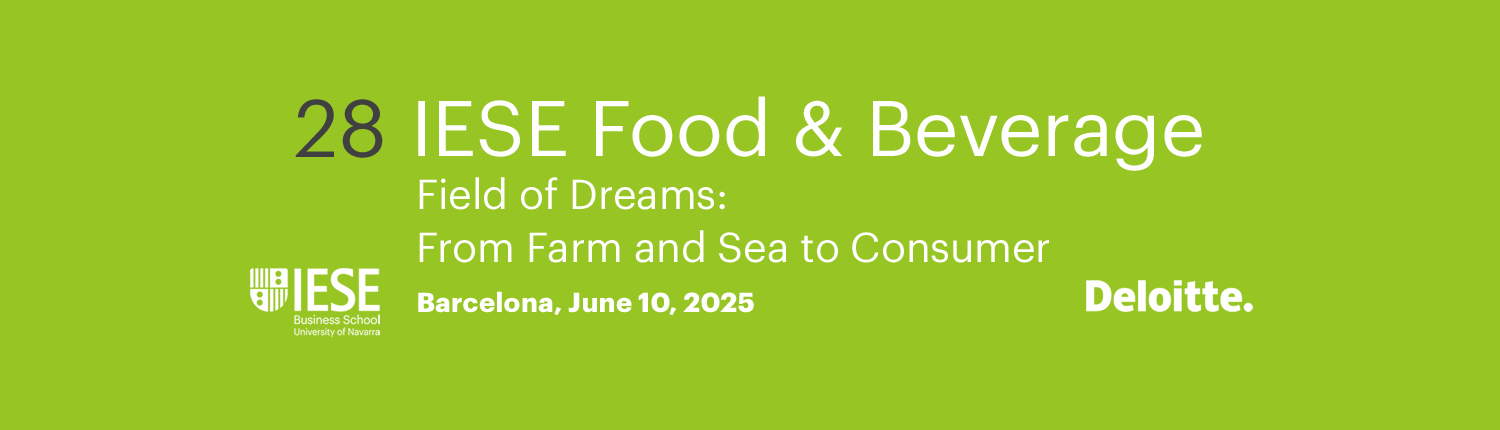
The IESE Food & Beverage Meeting, the industry’s major meeting point, is back with an edition inspired by the slogan “Field of Dreams: From Farm and Sea to Consumer.” The program is for everyone who wants to anticipate challenges and lead with vision. At the meeting, we’ll discuss geopolitical, economic and regulatory challenges in an ever-changing world. We’ll dive deep into reinventing the primary sector and understanding that sustainability starts at the source.
We’ll reflect on the future of food, agriculture and the role of innovation and artificial intelligence. We’ll also explore how leadership is focused by learning to communicate better in business and social media. We’ll hear success stories in terms of diversification, global expansion and strategic alliances that make a difference. And we’ll address the challenge of the changing talent landscape and the future of work. This must-attend meeting is for sharing, inspiration, debate and transformation. The future of food begins here.
Co-organizer:

Collaborating companies:


28 IESE Food & Beverage
DISCOVER EVERYTHING YOU MISSED!
Did you miss it? Now you can relive it!
The 28 IESE Food & Beverage was a complete success, with the participation of more than 402 people
and the contribution of the most professional speakers in the sector, whose contributions
have not left us indifferent at all.
Couldn’t attend?
No worries! For the first time, we are giving you the chance to
get full access to the event recordings. You’ll be able to:
Special Offer: For a limited time, enjoy a 50% discount when purchasing full access.
Don’t miss this opportunity to catch up and experience the event as if you were there.
Use the promo code LO QUIERO.
Don’t miss out on the conversation!
TO PURCHASE AND ACCESS THE FULL CONTENT!
| 09:30-09:45 | Opening
• Prof. Miquel Lladó, Academic Director of the Meeting, IESE Business School |
| 09:45-10:30 | Geopolitics and Economics in a Changing World
Where is global trade heading and what are the implications for the food industry? The future of global trade is being shaped by increasing geopolitical fragmentation that is redefining the rules of the game: friend-shoring, regional blocs, tariffs, and agreements like Mercosur are transforming supply chains and posing new challenges to ensure food sovereignty. In this polarized landscape, it is crucial to analyze how global changes are impacting the food sector and what local decisions are needed to adapt to this new era. • Ana Aguilar, Chief Economist, Deloitte Moderator: Prof. Miquel Lladó, IESE Business School |
| 10:30-11:15 | Challenges of the Spanish Food Industry
Is the industry prepared to meet ambitious targets in record time? In 2023, Spain recycled only 41.3% of single-use plastic bottles—well below the 70% required by law. This shortfall makes it necessary to implement a deposit return system (DRS) before November 2026. Similar to traditional glass bottle return schemes, this system will cover plastic bottles, cans, and cartons, aiming to improve packaging recovery through financial incentives. The implementation faces challenges such as resistance from certain industries and the need for proper infrastructure. However, the DRS is expected to significantly boost recycling rates and encourage greater environmental responsibility among both consumers and businesses. • Jose Miguel Herrero, Director General of Food, Ministry of Agriculture, Fisheries and Food Moderator: Enrique Domínguez, Partner, Deloitte |
| 11:15-11:45 | Coffee-Break |
| 11:45-12:30 | Driving Growth Through Innovation, Diversification, Global Expansion and Strategic Partnerships
To drive business growth, five key areas stand out: innovation, which is essential to maintain competitiveness through new technologies and products; diversification, which helps mitigate risks and tap into new markets; global expansion, which provides access to new customers and economies of scale; strategic partnerships, which facilitate access to shared resources and knowledge; and sustainability, which not only responds to social demands but also opens up new business opportunities. Integrating these strategies with a coherent vision is essential to achieving sustained and competitive growth. • Mar Doñate, Vice President of Transformation, Bimbo EMEA and GM of the North Africa Region, Grupo Bimbo Moderator: Manuel Barberá, Managing Director, Head of F&B, Corporate and Investment Banking, CaixaBank |
| 12:30-13:15 | The Talent Equation in the Future of Work
The roundtable will address the challenges of attracting and retaining talent in companies located outside major cities, highlighting innovative solutions such as remote work, which helps overcome geographical barriers and provides access to a broader workforce. Strategies to create attractive work environments will be explored, including the implementation of digital tools that support collaboration and professional development, as well as the promotion of a corporate culture that values well-being and flexibility. Additionally, initiatives that combine practical training and career guidance to improve employability in less urbanized regions will be discussed. • Gonzalo Iturmendi, GLOBAL Director PEOPLE Centers of Excellence, Cosentino Moderator: Rocio Abella, Partner, Deloitte |
| 13:15-14:00 | A Focus on Leaders: Improving Personalized Communication
Beyond the Product: Communicating with Humanity in a Message-Saturated World In an environment where attention is the most scarce resource, true differentiation lies not only in what we sell, but in how we tell the story. This panel will explore how brands in the Food & Beverage sector can build more authentic, emotional, and lasting relationships with their customers through communication that is more personalized, transparent, and human. We will discuss leadership, empathy, and strategic storytelling—key elements to truly connect at every touchpoint. • Paula Babiano, Founder and CEO, Balbisiana Moderator: Managing Director Spain & Portugal, Bühler Group |
| 14:00-15:30 | Lunch |
| 15:30-16:55 | Reinventing the Primary Sector: Sustainability Starts at the Beginning
15:30-15:45 Global Vision, Local Action: Rethinking the Food System from the Ground Up • Randy Jagt, Partner, Future of Food Leader for Deloitte Global 15:45-16:55 This panel focuses on how the primary sector can reinvent itself to face the major challenges of today and tomorrow. From adopting new technologies to developing governance models that attract young talent, we will explore how to make agricultural work a modern, strategic, and purpose-driven choice. We’ll bring together case studies and perspectives that show how innovation, sustainability, and leadership can come together to revitalize agriculture and secure its key role in the transition of the food system. • Rocio Hervella, CEO & Founder, Productos Solubles PROSOL Moderator: Prof. Miquel Lladó, IESE Business School |
| 16:55-17:45 | AI in Action: Practical Solutions
The roundtable will delve into the practical application of artificial intelligence (AI) in the food industry, presenting real cases of successful implementation. It will explore how AI optimizes operations, enhances decision-making, and boosts sustainability in food production and distribution. Additionally, the discussion will analyze AI’s impact on creating value for both companies and consumers, highlighting concrete examples of its integration within the sector. • Luis González Gugel, Partner, Deloitte |
| 17:45-18:00 | Wrap-up and Closing
• Enrique Domínguez, Partner responsible for the Consumer Goods and Distribution sector, Deloitte Spain |
| 18:00 | Networking Drinks |
Note: In case of international speakers, we provide simultaneous translation during the event.

Academic Director of the Meeting

Meeting Co-organizer

Moderator

Speaker

Speaker

Moderator

Moderator

Speaker

Speaker

Speaker

Speaker

Speaker

Speaker

Speaker

Speaker

Speaker

Speaker

Speaker

Speaker

Speaker

Speaker

Speaker

Speaker

Speaker
The 28 IESE Food & Beverage Meeting will be held on IESE Barcelona
The fees for this meeting:
On Campus: € 1,000
On Campus: € 900
On Campus: € 700
PAYMENT MUST BE MADE PRIOR TO PROGRAM ATTENDANCE
We know that knowledge and networking are key to open new doors.
This meeting is a unique opportunity to share ideas, connect with industry leaders
and explore trends that are transforming the world of Healthcare
DON’T BE LEFT OUT
If this is your case, write to Claudia Escobar (cescobar@iese.edu) and tell us about your case


2024 · In search of value creation: Innovate. Elevate. Inspire
2023 · The new paradox: finding certainty in an uncertain business environment
2022 · The future of the sector. Towards new balances
2021 · Post-COVID strategy and perspectives · Session June 1, 2021
2021 · Post-COVID strategy and perspectives · Session April 14, 2021
2020 · Post-COVID strategy and perspectives · Session March 8, 2021
2019 · Feeding the Future
2018 · State of Play and Future Scenarios
2017 · Sustainable Growth Strategies: Challenges and Opportunities
2016 · A Global, Creative Look at Growth, New Markets and Change
2015 · The Road to 2025 and Beyond
2014 · The Four I-Engines of the Industry
2013 · Selling Across Continents
2012 · Growth in the recession. Examples for industry and retail
2011 · In search of added value: how to get consumers, margins and competitiveness back
2010 · Food wars: counterattack brands. Rebuilding the industry’s future
Artificial Intelligence (AI) is revolutionizing the healthcare industry by enabling more precise diagnostics, personalized treatment plans, and enhancing operational efficiency. AI-powered tools are transforming the way healthcare professionals approach patient care, utilizing machine learning algorithms to analyze vast amounts of data quickly and accurately. From early detection of diseases through medical imaging to predicting patient outcomes with predictive analytics, AI is reshaping how care is delivered, ultimately improving both quality and accessibility. The integration of AI into healthcare systems is not just a technological advancement but a fundamental shift in the way we understand and approach medicine.
One of the most significant contributions of AI in healthcare is its potential to help build an ecosystem of value-based care. Moving away from a volume-based model, where care is measured by the number of procedures performed, value-based healthcare focuses on patient outcomes and long-term health improvements. AI can drive this shift by providing actionable insights from data, improving decision-making, and optimizing patient management. By enabling personalized care and identifying high-risk patients early, AI can help healthcare systems move towards preventive measures and more effective interventions, reducing costs and improving patient satisfaction.
Prevention is another key area where AI can create substantial impact. With an aging population and the growing burden of chronic diseases, prevention is more important than ever. AI technologies, such as wearable devices and remote monitoring systems, can continuously gather health data, enabling real-time monitoring and early interventions. This shift from reactive to proactive healthcare empowers patients to take control of their health and enables healthcare providers to intervene before conditions worsen. AI’s ability to predict health risks, track lifestyle behaviors, and provide tailored advice has the potential to significantly reduce the prevalence of preventable diseases, creating a healthier society overall.
Under the lemma “AI in healthcare” IESE Healthcare will reflect on the imminent challenges, innovations and unparalleled opportunities that will shape the future of healthcare. We aim to explore key questions about the future of care, the impact on healthcare professionals, technology´s role, disruptive technologies in the horizon and the delicate balance between the data revolution and privacy protection. It will also bring together top experts from the sector to think about how the different agents in healthcare can work together to continue building a healthier society while leveraging the enormous potential of AI.
Co-organizer:

Collaborator:

31 IESE Healthcare
DISCOVER EVERYTHING YOU MISSED!
Did you miss it? Now you can relive it!
The 31 IESE Healthcare was a complete success, with the participation of more than 400 people
and the contribution of the most professional speakers in the sector, whose contributions
have not left us indifferent at all.
Couldn’t attend?
No worries! For the first time, we are giving you the chance to
get full access to the event recordings. You’ll be able to:
Special Offer: For a limited time, enjoy a 50% discount when purchasing full access.
Don’t miss this opportunity to catch up and experience the event as if you were there.
Use the promo code LO QUIERO.
Don’t miss out on the conversation!
TO PURCHASE AND ACCESS THE FULL CONTENT!
| 09:00-09:30 | Opening
• Pablo Crespo, Secretary General, Fenin |
| 09:30-10:00 | Geoeconomic Outlook. Implications for healthcare in the next decade
• Prof. Núria Mas, IESE Business School |
| 10:00-10:30 | Conversation with Joaquin Duato
With Joaquin Duato, CEO of Johnson & Johnson, we will talk about how AI is transforming the pharmaceutical industry—from accelerating drug discovery and development to optimizing patient care and operational efficiency. Beyond technology, we will explore what it takes to lead in an era of rapid change, navigating scientific breakthroughs, regulatory shifts, and evolving patient needs and we will reflect about why the next decade will be key for health innovation. • Joaquin Duato, Chairman and CEO, Johnson & Johnson Moderator: Prof. Núria Mas, IESE Business School |
| 10:30-11:30 | AI and Data: Pioneering the Next Frontier in Healthcare
As AI and data-driven technologies continue to transform healthcare, organizations must navigate the opportunities and challenges of digital innovation. How can AI-driven platforms enable secure and efficient health data sharing? How are hospitals integrating AI to improve patient outcomes and streamline operations? And how are medical devices evolving to enhance diagnosis, treatment, and patient monitoring? • Ronni Gamzu, Director, Tel Aviv Sourasky Medical Center Moderator: Rocio Arrese, Deloitte |
| 11:30-12:00 | Coffee Break |
| 12:00-13:00 | Turning Data into Impactful Decisions
In an era of exponential data growth, the ability to transform health data into meaningful, actionable decisions is reshaping the future of Healthcare. But how can we ensure that data is accessible, secure, and used effectively to drive better patient outcomes? What role does AI play in making data more accessible and meaningful for hospitals, insurers, and innovators? How can we ensure interoperability, security, and ethical use of health data while maximizing its value? • Pedro Álvarez de la Gala, Digital Innovation Lead, Roche Pharmaceuticals Spain Moderator: Prof. Núria Mas, IESE Business School |
| 13:00-13:30 | Transforming healthcare in Catalonia
• Manel del Castillo Rey, Managing Director, Hospital Sant Joan De Déu Moderator: Prof. Núria Mas, IESE Business School |
| 13:30-14:45 | Lunch |
| 14:45-16:00 | Innovation, talent and technology
Advancing healthcare requires the right combination of cutting-edge technology, strategic innovation, and top talent. How can the industry attract and retain the brightest minds to drive breakthrough discoveries? What role do AI, data, and emerging technologies play in shaping the next generation of medical solutions? How can pharma and medtech companies create environments that foster continuous innovation? • Gonzalo de Miquel, VicePresident Global Clinical Development, AstraZeneca rare disease, Alexion Moderator: Prof. Núria Mas, IESE Business School |
| 16:00-16:15 | Coffee Break |
| 16:15-16:40 | Unlocking the Power of GenIA for R&D
• Dr. Dan Ferrante, PhD SFL Scientific, Deloitte Business Moderator: Álvaro Ortín, Partner AI en Healthacer and Lifescience, Deloitte/em> |
| 16:40-17:40 | Building Trust and Collaboration in Healthcare Data
In a world where data drives innovation, the healthcare sector faces a critical challenge: balancing accessibility with security. This panel will dive into how data ecosystems can revolutionize patient care, the ethical imperatives of data privacy, and the policies needed to foster trust. Join leading voices as they discuss the future of collaboration between researchers, providers, and policymakers to unleash the full potential of healthcare data. • Xavier Borrat, Anesthesiology and Resuscitation, Hospital Clinic de Barcelona Moderator: Iñaki Moreno, Deloitte |
| 17:40 | Final thoughts and Closing
• Fina Lladós, President, Farmaindustria |
Note: In case of international speakers, we provide simultaneous translation during the event.

Academic director

Co-organizer of the Meeting
Speaker
Speaker
Speaker

Speaker
Speaker
Speaker

Speaker
Speaker
Speaker
Speaker
Speaker
Speaker

Speaker

Speaker

Speaker

Moderator
Speaker
Speaker
Speaker
The 31 IESE Healthcare Meeting will be held on IESE Barcelona
The fees for this meeting:
On Campus: € 1,000
Online: € 400
On Campus: € 900
Online: € 400
On Campus: € 700
Online: Free
PAYMENT MUST BE MADE PRIOR TO PROGRAM ATTENDANCE
We know that knowledge and networking are key to open new doors.
This meeting is a unique opportunity to share ideas, connect with industry leaders
and explore trends that are transforming the world of Healthcare
DON’T BE LEFT OUT
If this is your case, write to Claudia Escobar (cescobar@iese.edu) and tell us about your case
2024 · Healthcare 2030. Envisioning the next decade
2023 · Home is the new hospital
2022 · Byte-Medicine: the revolution of the convergence of technology and medicine
2021 · Life sciences: the engine for the recovery after COVID-19
2019 · Rising to the Challenge: Healthcare First
2018 · Working for a healthy society
2017 · Building a Sustainable Healthcare Model
2016 · Towards Value-Based Healthcare
2015 · Innovation for the New Healthcare Era
2014 · Propelling Change
2013 · Making Patient-Centric Care Happen
2012 · Value Creation and Value Sharing
2011 · Toward a Change of Model
2010 · The Healthcare Industry in 2020
2009 · Toward a New Model of Industry (Pharma) / Recognizing Value (Healthcare)
2008 · Betting on the Sector (Pharma) / Innovating With Responsibility (Healthcare)
2007 · The Global Opportunity
2006 · Contributing More (Pharma) / The Value of Technology (Healthcare)
2005 · Healing Under Pressure
2004 · Rethinking Health
2003 · Health Technologies and the Management of Health Budgets
2002 · Key Variables for Consideration
2001 · Whither the Spanish Health System?
2000 · The Market for Medical Devices in the European Union
1999 · New Millennium, New Challenges
1998 · Health Reform in Practice: New Ways to Buy and Sell
1997 · Economic Limits of Health Since 1998
1996 · Spanish Health: Reality, Change and Adjustment
1995 · Present and Future
1994 · Building From the Crisis