At IESE Business School, our Industry Meetings are far more than events: are meeting points where innovation and business leadership converge. This year, we want to invite your business to become part of our unique experience through our Sponsorship Program.
Be part of the change
Work with us and put your brand at the forefront of the most important conversations in your industry:
#Aerospace, #Energy, #Food&Beverage, #Healthcare, #Insurance, #Mobility.
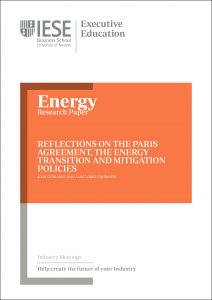
Nobel laureate Al Gore used the phrase “an inconvenient truth” in 2006 to refer to the challenge of climate change. Today, we must also consider other inconvenient truths because, if they are not addressed, we will not be able to make progress with the huge undertaking of working toward a low-carbon economy.
The location of mines of critical raw materials, the refineries where they are processed and the plants where technology goods are manufactured have suddenly become highly relevant. Along these lines, The United States’ recent Inflation Reduction Act (IRA) and current discussions in Australia on how to control the industry of critical materials processing highlight the new concerns that will certainly delay and increase the cost of the colossal transformation involved in the decarbonization of society.
However, the relevant provision of global public goods such as peace, health, food security, prosperity leading to the elimination of poverty, and decarbonization will not be possible without multilateral cooperation among sovereign states.
How should these movements be interpreted in Europe, where public opinion is so decisive when it comes to legitimizing political action? Initiative, power and the economy have always been delicate matters and the essential ingredients of any government of citizens. For these subjects with dignity, rights and obligations, the pendulum of power has always swung between the idealistic opportunity of achieving the impossible and the art of doing what is possible. Although this second option almost always lacks epic, lyrical appeal, when it is implemented with realistic ambition, it can achieve historic heights of social progress while avoiding the convulsions engendered by frustration with the unattainable. When doubts arise, finding inspiration in the nearly 30 centuries of Pharaonic Egyptian history is highly recommended.
We should therefore make a distinction between the goals (besides the necessary and urgent ones) that can be considered achievable and the ones that are unfortunately not currently achievable, either because the enabling technologies are not available (2022 update of the IEA’s Tracking Clean Energy Progress) or, as in other cases, due to the sovereign decision of states.
Having reached this point, by making use of all the technological options available, based on the principle of technology neutrality, and by working smart at a steady pace, let’s take a cold hard look at the priorities that should form part of the idealism of the possible.

22 IESE ENERGY
DISCOVER EVERYTHING YOU MISSED!
Did you miss it? Now you can relive it!
The 22 IESE Energy was a complete success, with the participation of more than 500 people
and the contribution of the most professional speakers in the sector, whose contributions
have not left us indifferent at all.
Couldn’t attend?
No worries! For the first time, we are giving you the chance to
get full access to the event recordings. You’ll be able to:
Special Offer: For a limited time, enjoy a 50% discount when purchasing full access.
Don’t miss this opportunity to catch up and experience the event as if you were there.
Use the promo code LO QUIERO.
Don’t miss out on the conversation!
TO PURCHASE AND ACCESS THE FULL CONTENT!
| 08:45-09:10 | Registration |
| 09:10-09:50 | Institutional Welcome:
• Oliverio Álvarez, Co-organizer of the Meeting, Partner responsible of Energy, Resources & Industrials, Deloitte España |
| 09:55-11:05 | The European Union’s Physical and Institutional Energy Structure: A Pending Challenge for the European Legislature
• Rodrigo Costa, Chair and CEO, REN Directed by: Oliverio Álvarez, Deloitte España |
| 11:05-11:40 | Coffee break |
| 11:45-12:45 | Energy Taxes and Parafiscal Taxation: An Orchestra Whose Instruments Are Out of Tune
• Jorge Sanz, Former general director of Energy Policy and Mines Directed by: Francisco Martín Barrios, Partner, Deloitte |
| 12:50-13:15 | How and Why the Energy Transition Will Shape the Future of Geopolitics*
• Nemesio Fernández-Cuesta, President, Energy Transition Group, Alantra Partners Directed by: Prof. Juan Luis López Cardenete, IESE Business School * Title inspired by his new book |
| 13:15-14:15 | Energy Transition, Industrial Policy and Competitiveness
• Alicia García-Herrero, Chief Economist, Asia Pacific, Natixis (online intervention) Directed by: Prof. Juan Luis López Cardenete, IESE Business School |
| 14:15-15:00 | Technology and the Decarbonization Industry: What Is Keeping Europe from Playing a Leading Role?
• Dr. Sama Bilbao y León, DG, World Nuclear Association Directed by: Prof. Edi Soler, IESE Business School |
| 15:00-16:10 | Lunch |
| 16:15-17:00 | To What Extent Does the PNIEC Constitute a Framework Agreement for Projecting the Strategic Future?
• Rafael Mateo, CEO, Acciona Energía Directed by: Oliverio Álvarez, Deloitte España |
| 17:05-17:45 | Is There an Alternative to Fossil Fuels in the Global South? Implications for Their Poverty Reduction Processes
• Luis Atienza, President, Argo Capital Group Directed by: Prof. Massimo Maoret, IESE Business School |
| 17:45-18:10 | Coffee break |
| 18:10-19:00 | The Principles of Predictability, Simplicity and Trust: The Role of the State in the Energy Transition as a Regulator, Facilitator and Arbiter
• Manuel García Cobaleda, General Counsel, Naturgy Directed by: José María Elias de Tejada, Deloitte España |
| 19:00-19:45 | Strategic Autonomy and Decarbonization
• Ana Palacio, former Foreign Affairs Minister, Spain. Visiting Professor, Georgetown University Directed by: Prof. Juan Luis López Cardenete, IESE Business School |
| 08:30-09:00 | Registration |
| 09:00-09:35 | Institutional Welcome
• Oliverio Álvarez, Deloitte España |
| 09:40-10:40 | New Energy Vectors Free of Fossil Fuels for Non-Electrifiable Demand
• Prof. Vicente Cortés Galeano, Professor and Honorary Chair, Inerco Corporation Directed by: Ana Sánchez Palacios, Deloitte España |
| 10:45-11:15 | Coffee break |
| 11:15-12:15 | Electrification as the Pivot of the Energy Transition: Why Is the New Demand Not Developing?
• Carmen Becerril, President, OMEL Directed by: Laureano Álvarez, Deloitte España |
| 12:15-13:15 | Digitalization, Productivity and Decarbonization: Shortage of Safe, Clean and Affordable Energy
• Manuel Menéndez Menéndez, Chairman of EDP Spain, Chairman of the EDP Foundation and member of the Board of Directors of EDP Renováveis Directed by: Ana Aguilar, Chief Economist, Deloitte |
| 13:20-14:00 | Closing
• Oliverio Álvarez, Deloitte España |
Note: In case of international speakers, we provide simultaneous translation during the event.

Co-organizer of the Meeting

Speaker

Speaker

Speaker

Speaker

Speaker

Speaker

Speaker

Speaker

Speaker

Speaker

Speaker

Speaker

Speaker

Speaker

Speaker

Speaker

Speaker

Speaker

Speaker

Speaker

Speaker

Speaker

Speaker

Speaker

Speaker

Speaker

Speaker

Speaker

Speaker

Speaker

Speaker

Speaker

Speaker

Speaker

Speaker

Speaker

Speaker

Speaker

Speaker

Speaker

Speaker
The 22 IESE Energy Meeting will be held on IESE’s new campus in Madrid
The fees for this meeting:
On Campus: € 1,200
Online: € 400
On Campus: € 1,000
Online: € 400
On Campus: € 850
Online: Free
PAYMENT MUST BE MADE PRIOR TO PROGRAM ATTENDANCE
We know that knowledge and networking are key to open new doors.
This meeting is a unique opportunity to share ideas, connect with industry leaders
and explore trends that are transforming the world of Energy
DON’T BE LEFT OUT
If this is your case, write to Claudia Escobar (cescobar@iese.edu) and tell us about your case


2024 · The Energy Transition: Be Idealistic! Achieve the Possible!
2023 · Let’s Save the Energy Transition – It’s in Danger!
2022 · Energy Transition: Towards a Holistic Strategy
2021 · The post-COVID Energy Transition: same goals, different policies
2020 · An Industry in Transition
2019 · Dimensions for an Effective Energy Transition
2018 · Game changers in the Global Energy System
2017 · Energy Architecture in Transition
2016 · Human Well-being, Growth and Energy Access: New Governance for a Unique Challenge
2015 · The Future of Energy: Who Calls the Shots?
2014 · Quo Vadis, Europe? Shedding Light on an Energy Policy beyond the Electrical Sector Reform
2013 · A New Energy Policy as a Global Paradigm Shift Emerges
2011 · The Impact of the Energy Policy on the Sector’s Competitiveness
2009 · A Debate on the Spanish Energy Sector
2004 · Energy Liberalization and Consolidation in Europe
2002 · A Shift Towards the Convergence of Energy Markets
2000 · Mergers and Strategic Alliances: The Creation and Conquest of the Future
Resilience and innovation have taken center stage in the real estate industry, particularly in an economic environment as challenging as today’s. Now more than ever, the ability to adapt and transform is not only an advantage, but a necessity to deal with uncertainty and seize opportunities.
The industry faces complex challenges, including sustainability, energy efficiency, new forms of investment and the use of advanced technologies that redefine the user experience. In addition, evolving user tastes and habits add their own dynamics. In this context, collaboration between professionals and academics is key to building a solid, flexible future.
At this year’s Industry Meeting, we’ll dig deep into the drivers of industry change: technological innovation, sustainability and regulation. Through a series of panel discussions and workshops featuring top-level guests, we’ll explore how the real estate industry should not merely adapt to change in this new environment, but can lead it by helping build a more dynamic, efficient and resilient market.
11 IESE Real Estate
DISCOVER EVERYTHING YOU MISSED!
Did you miss it? Now you can relive it!
The 11 IESE Real Estate Meeting marked a turning point in the real estate sector.
With over 425 participants and 25 speakers, industry leaders, experts, and professionals shared
their insights on the most relevant topics.
Couldn’t attend?
No worries! For the first time, we are giving you the chance to
get full access to the event recordings. You’ll be able to:
Special Offer: For a limited time, enjoy a 50% discount when purchasing full access.
Don’t miss this opportunity to catch up and experience the event as if you were there.
Use the promo code LO QUIERO.
Don’t miss out on the conversation!
TO PURCHASE AND ACCESS THE FULL CONTENT!
| 08:30-09:00 | Registration |
| 09:00-09:10 | Opening
• Prof. José Luis Suárez, Co-Academic Director of the Meeting, IESE Business School |
| 09:15-10:05 | Residential: New Trends and Social Impact in Living/Residential: Where Are We? How Can We Meet Social Demand?
This session will explore emerging trends in the residential sector and their impact on society, and will analyze strategies to adapt and respond to current and future needs of the population. We’ll delve into the ways that changing demographics and lifestyles, as well as new expectations of sustainability and affordability are redefining the housing market. We’ll also address the challenges and opportunities for developing residential spaces that promote well-being, inclusion and efficiency in a constantly changing urban environment. • Marta Cladera, Managing Director, Head of Portfolio Management Europe, Housing and Alternatives, Nuveen Real Estate Moderator: Prof. José Luis Suárez, IESE Business School |
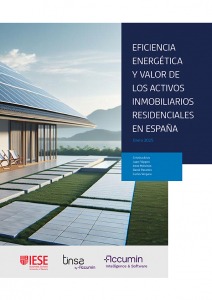
| 10:10-10:30 | The Impact of Improvements in Energy Efficiency on Housing Prices
Prof. Vergara will present an academic study based on data from millions of energy efficiency certificates of residential housing, and he’ll analyze their relationship with the final price of the residence. This study is being carried out in collaboration with Tinsa by Accumin. • Prof. Carles Vergara, IESE Business School |
| 10:35-10:55 | Anniversary Special: 30 Years of Driving the Present and Future of Real Estate at IESE |
| 11:00-11:25 | Coffee Break |
| 11:30-12:00 | Interview: Experiences of Innovation, Growth and Resilience in the Real Estate Sector
• Fernando Encinar, Co-Founder and CMO, Idealista Moderator: Susana Rodríguez, Chief Commercial Officer, Savills España |
| 12:05-12:55 | Sustainability and Technology as Drivers of Innovation
This session will address how sustainability and technology have become key drivers of innovation in the real estate industry. We’ll discuss how adopting advanced technologies such as digitalization and artificial intelligence, coupled with a deep commitment to sustainability, is transforming business models and creating new opportunities. We’ll explore success stories and strategies that show how these two elements can be combined to develop more efficient and resilient real estate projects that are aligned with environmental and social impact targets. • Stanley Fourteau, Co-Founder and CEO, Ukio Moderator: Prof. Carles Vergara, IESE Business School |
| 13:00-13:50 | Regulation: Challenges and Opportunities in a Context of Transformation
This session will analyze the crucial role of regulation in an ever-changing real estate environment by exploring the challenges and opportunities it presents. We’ll examine how current and future regulations impact project development, investment and sustainability in the industry. We’ll also discuss how the regulatory framework is adapting to new market realities and social needs, as well as the implications for key industry players. • Rafael Fernández Villaverde, Managing Director, Greystar Real Estate Partners Moderator: Prof. José Luis Suárez, IESE Business School |
| 14:00-14:40 | Workshops
On-campus participants will be divided into two groups to discuss different agenda items. You’ll be able to indicate your workshop preference when you register. You can also inform us if you don’t want to participate. Groups will be organized on a first-come, first-served basis in terms of seating capacity to encourage active participation of attendees. The topics to be discussed are: 1. How Technological Innovation Drives the Real Estate Industry Until now, it was said that the real estate industry was lagging behind other industries in terms of the implementation of technology. That may have been true before, but the gap is now narrowing. It’s becoming more and more common to see different technological advances such as artificial intelligence being implemented in real estate companies. Furthermore, many technology firms are entering the real estate industry to take advantage of the margin of the most profitable operations and using technology to ease the friction generated by real estate activity. • Juan Antonio Gómez-Pintado, Chair, Vía Ágora Moderator: Prof. José Luis Suárez, IESE Business School 2. Investment Strategies in the Real Estate Market Investment strategies are changing in the real estate industry. How the evolution of interest rates will affect prices is still unclear (the spreads or differences between buyers’ and sellers’ prices are still wide) and the emergence of new industries and products (e.g., data centers, well-being services) have forced investors to develop new strategies and new financing schemes (such as the inclusion of direct lending. • Eduardo Bóveda, Managing Director, Victoria Asset Management Moderator: Prof. Carles Vergara, IESE Business School |
| 14:45-15:45 | Lunch and appetizers |
| 15:55-16:45 | Financial Outlook in a Challenging Environment: Are We Heading Toward a More Stable Financial Setting? How Will It Affect Value and Financial Transactions?
We’ll explore financial perspectives in a context of uncertainty and change by deciding if we’re moving toward greater stability or whether risk factors are here to stay. We’ll analyze how the current economic outlook, with its market volatility and inflation, affects real estate value and financial transactions. The panelists will discuss strategies and opportunities to seize opportunities, mitigate risks, adapt to market fluctuations and find stability in a complex financial environment. • Daniel Caballero, Director of Real Estate Business and Developers, CaixaBank Moderator: Susana Rodríguez, Chief Commercial Officer and Executive Director Head of Living, Savills España |
| 16:50-17:40 | Hospitality: How Is It Evolving? Is It the Safest and Most Profitable Segment of the Real Estate Industry?
This session will address the evolution of the hotel and tourism industry, which has experienced an incredible boom in the real estate market. We’ll analyze the dynamics driving this segment, including the increase in tourism demand and new trends in experiences and services. We’ll try to decide whether hospitality currently represents the safest and most profitable segment in real estate by exploring the opportunities and challenges it poses, as well as the strategies that key players are adopting to maximize value in this expanding environment. • Javier Faus, Chair, Meridia Moderator: Belén Dávila, Directora Grandes Cuentas, Tinsa by Accumin España |
| 17:45 | Closing |
Note: In case of international speakers, we provide simultaneous translation during the event.
On-campus participants will be distributed in two groups that will debate two topics of the program. When registering, you can indicate your workshop preference. The organization will assign participants to the groups in order of registration based on the capacity limit. The conclusions of each workshop group will be presented to all participants in the final phase of the workshop.

Speaker

Speaker

Speaker

Speaker

Moderator

Speaker

Speaker

Speaker

Speaker

Speaker

Speaker

Speaker

Speaker

Speaker

Speaker

Speaker

Speaker

Speaker

Speaker

Speaker

Speaker

Moderator
The 11 Real Estate Meeting will be held on IESE’s new campus in Madrid
The fees for this meeting:
On Campus: € 1,000
Online: € 400
On Campus: € 900
Online: € 400
On Campus: € 700
Online: Free
PAYMENT MUST BE MADE PRIOR TO PROGRAM ATTENDANCE
We know that knowledge and networking are key to open new doors.
This meeting is a unique opportunity to share ideas, connect with industry leaders
and explore trends that are transforming the world of Real Estate
DON’T BE LEFT OUT
If this is your case, write to Claudia Escobar (cescobar@iese.edu) and tell us about your case
2024 · Innovating toward a Flexible and Dynamic Future
2023 · Real Estate: winning strategies in uncertain times
2022 · Building social sustainability
2021 · The art of evolving
2020 · Real Estate in a Changing Society
2019 · The New Normal in Real Estate
2018 · Where Are We in the Real Estate Cycle
2017 · Real Estate and Society
2016 · The Renovation of the Real Estate Industry in Spain
A series of top-level conversations on the economic, technical and scientific conditions anticipated in the future of the energy industry.
Energy Prospectives will bring together world figures recognized for their experience, vision and knowledge of the energy industry so they can share their expertise with business owners, regulators, senior managers and academics.
Don’t miss the video with the most relevant contributions and reflections from the previous edition. See video
Simultaneous translation in English and Spanish in all sessions.

Speaker
Economist specializing in energy policy, regulation, and market design, with a focus on European markets, he served as the first Director of the EU Agency for the Cooperation of Energy Regulators (ACER) from 2010 to 2019. His career includes work with consultancy firms and regulatory bodies, such as the Italian Energy Regulatory Authority, where he led the regulation of the electricity sector and served as CEO of the Italian Electricity Market Operator. From 2006 to 2010, he was a partner at Mercados EMI, an international consultancy specializing in energy markets.
At present, he is the Executive Deputy Director of the World of Practice at the Florence School of Regulation and actively leads the “Regulatory Policy Workshop Series” focusing on the most relevant aspects of the energy sector.

Speaker
Professor and Founding Chair of the Policy Institute at King’s College London, he previously served as Vice President of BP’s Strategy and Policy Development Group, and later as Senior Policy Adviser to British Prime Minister Gordon Brown.
As an economist specializing in energy, he focuses on the economic and political dimensions of the energy transition. Currently, he advises on energy policy at the Cavendish Laboratory in Cambridge and the Faraday Institution, which was established by the UK government to advance energy storage technologies. He also contributes to the Financial Times, the Nikkei Asian Review, and Prospect magazine.
On Campus – IESE Madrid
Claudia Escobar
cescobar@iese.edu
IESE Industry Meetings
tel: +34 93 253 43 36


ANDRIS PIEBALGS

JORGE PADILLA

CHRISTOPHER JONES

IGNACIO PÉREZ-ARRIAGA

MICHAEL LIEBRIECH

CLAUDIO ARANZADI
June 19, 2024 · Energy Prospectives – EP#16
April 4, 2024 · Energy Prospectives – EP#15
October 10, 2023 · Energy Prospectives – EP#14
July 5, 2023 · Energy Prospectives – EP#13
April 12, 2023 · Energy Prospectives – EP#12
November 4, 2022 · Energy Prospectives – EP#11
June 16, 2022 · Energy Prospectives – EP#10
March 17, 2022 · Energy Prospectives – EP#9
October 26, 2021 · Energy Prospectives – EP#8
June 9 de 2021 · Energy Prospectives – EP#7
March 16, 2020 · Energy Prospectives – EP#6
November 25, 2020 · Energy Prospectives – EP#5
July 14, 2020 · Energy Prospectives – EP#4
October 15, 2019 · Energy Prospectives – EP#3
June 20, 2019 · Energy Prospectives – EP#2
March 14, 2019 · Energy Prospectives – EP#1
A series of top-level conversations on the economic, technical and scientific conditions anticipated in the future of the energy industry.
Energy Prospectives will bring together world figures recognized for their experience, vision and knowledge of the energy industry so they can share their expertise with business owners, regulators, senior managers and academics.
Don’t miss the video with the most relevant contributions and reflections from the previous edition. See video
| 09:30 | OPENING
• Rafael Villaseca, President of Naturgy Foundation |
| 09:45 | GOVERNMENT AND ENERGY
A North American model • Joseph Eugene Stiglitz, Winner of the Nobel Prize in Economics, 2001 A European model • José Manuel Durão Barroso, President of the European Commission, 2004-2014 Colloquium Moderator: Prof. Jordi Gual, IESE Business School |
| 11:30 | CLOSING
• Prof. Jordi Gual, IESE Business School |
| 11:45 | Networking coffee |
Simultaneous translation in English and Spanish in all sessions.

Speaker

Speaker
Live Online & On Campus – IESE Madrid
Claudia Escobar
cescobar@iese.edu
IESE Industry Meetings
tel: +34 93 253 43 36
The 16 Energy Prospective will be offered simultaneously on campus, attendance only by invitation, and online.
The fees for this meeting:
Online: Free
On Campus: Exclusively by invitation
Online: Free
On Campus: Exclusively by invitation
Online: Free
On Campus: Exclusively by invitation


ANDRIS PIEBALGS

JORGE PADILLA

CHRISTOPHER JONES

IGNACIO PÉREZ-ARRIAGA

MICHAEL LIEBRIECH

CLAUDIO ARANZADI
April 4, 2024 · Energy Prospectives – EP#15
October 10, 2023 · Energy Prospectives – EP#14
July 5, 2023 · Energy Prospectives – EP#13
April 12, 2023 · Energy Prospectives – EP#12
November 4, 2022 · Energy Prospectives – EP#11
June 16, 2022 · Energy Prospectives – EP#10
March 17, 2022 · Energy Prospectives – EP#9
October 26, 2021 · Energy Prospectives – EP#8
June 9 de 2021 · Energy Prospectives – EP#7
March 16, 2020 · Energy Prospectives – EP#6
November 25, 2020 · Energy Prospectives – EP#5
July 14, 2020 · Energy Prospectives – EP#4
October 15, 2019 · Energy Prospectives – EP#3
June 20, 2019 · Energy Prospectives – EP#2
March 14, 2019 · Energy Prospectives – EP#1
A series of top-level conversations on the economic, technical and scientific conditions anticipated in the future of the energy industry.
Energy Prospectives will bring together world figures recognized for their experience, vision and knowledge of the energy industry so they can share their expertise with business owners, regulators, senior managers and academics.
Don’t miss the video with the most relevant contributions and reflections from the previous edition. See video
| 09:30 | INAUGURATION
• Francisco Reynés, Chairman of Naturgy |
| 09:45 | ENERGY TRANSITION AND DEVELOPMENT OF RENEWABLE ENERGIES
• Francesco La Camera, Director General of the International Renewable Energy Agency (IRENA) Colloquium |
| 11:30 | CLOSING SESSION |
| 11:45 | Networking coffee |
Simultaneous translation in English and Spanish in all sessions.

Speaker

Speaker
Live Online & On Campus – IESE Madrid
Claudia Escobar
cescobar@iese.edu
IESE Industry Meetings
tel: +34 93 253 43 36
The 15 Energy Prospective will be offered simultaneously on campus, attendance only by invitation, and online.
The fees for this meeting:
Online: Free
On Campus: Exclusively by invitation
Online: Free
On Campus: Exclusively by invitation
Online: Free
On Campus: Exclusively by invitation


ANDRIS PIEBALGS

JORGE PADILLA

CHRISTOPHER JONES

IGNACIO PÉREZ-ARRIAGA

MICHAEL LIEBRIECH

CLAUDIO ARANZADI
October 10, 2023 · Energy Prospectives – EP#14
July 5, 2023 · Energy Prospectives – EP#13
April 12, 2023 · Energy Prospectives – EP#12
November 4, 2022 · Energy Prospectives – EP#11
June 16, 2022 · Energy Prospectives – EP#10
March 17, 2022 · Energy Prospectives – EP#9
October 26, 2021 · Energy Prospectives – EP#8
June 9 de 2021 · Energy Prospectives – EP#7
March 16, 2020 · Energy Prospectives – EP#6
November 25, 2020 · Energy Prospectives – EP#5
July 14, 2020 · Energy Prospectives – EP#4
October 15, 2019 · Energy Prospectives – EP#3
June 20, 2019 · Energy Prospectives – EP#2
March 14, 2019 · Energy Prospectives – EP#1
The 27th IESE Food & Beverage Meeting, themed “In Search of Value Creation: Innovate. Elevate. Inspire.”, will delve into the intricate facets of value creation within the Food and Beverage industry.
Throughout the event, discussions will span a variety of topics including geopolitical dynamics such as how political conflicts and international relations can impact the industry’s value chain. Additionally, considerations will be given to the silver economy and how families and businesses are navigating the new global economic cycle.
Regulatory landscapes, sustainability imperatives, and the role of technology, particularly artificial intelligence and cybersecurity, in enhancing supply chain efficiency and product personalization will also be explored. Furthermore, attention will be given to brand value, talent management strategies, including diversification and talent attraction, retention and motivation.
The importance of board governance in fostering innovation and elevation within the industry will be emphasized throughout the discussions.
This event provides unparalleled opportunities for industry leaders, experts, and visionaries to connect, facilitating valuable networking exchanges and fostering collaborations beyond the confines of the conference.
Whether you’re an experienced professional or an emerging talent, this meeting serves as an indispensable platform for gaining insights, forging connections, and unlocking pathways to success in the continually evolving landscape of the Food and Beverage industry.
| 08:30-09:15 | Reception |
| 09:15-09:30 | Welcome and Opening
• Prof. Miquel Lladó, Academic Director of the Meeting, IESE Business School |
| 09:30-10:30 | The World Stage: Geopolitics in Focus: Bridging Global and Local Realities
How can political conflicts and international relations impact the sector’s value chain? How are families and companies coping with the new global economic cycle? What will the new cycle be characterized by? How can consumer companies anticipate these trends? • Ana Aguilar, Chief Economist, Deloitte España Moderator: Prof. Miquel Lladó, IESE Business School |
| 10:30-11:15 | Coffee Break |
| 11:15-12:20 | Beyond Skills: Crafting a Culture of Talent and Integration
What diversification and talent attraction strategies can help address potential labor shortages in specific areas of the food sector? Are robots a solution to shortages in human capital? What public-private partnerships and joint initiatives can be developed to ensure a continuous flow of talent into the food industry? • Rosa Maria Carabel, CEO, Eroski Moderator: Enrique Domínguez, Deloitte |
| 12:20-13:25 | Regulatory Symphony: Orchestrating Sustainability and Competitiveness
Can regulatory policies be designed to incentivise innovation and the adoption of sustainable practices? What strategies can businesses adopt to transform the challenges that companies face in trying to comply with that companies face in trying to comply with regulations into competitive opportunities? Are there measurement and monitoring mechanisms to measure these objectives? • Mauricio García de Quevedo, Managing Director, FIAB Moderator: Prof. Miquel Lladó, IESE Business School |
| 13:30-14:50 | Lunch |
| 14:50-15:50 | Unveiling Strategies for Sustainable Brand Value
What are the most effective strategies for building a strong brand? How can product and service innovation contribute to increasing brand equity? How can companies manage and protect their brand reputation in times of crisis? What branding strategies can help differentiate a brand in highly competitive markets? • Ignacio Elola, Global Commercial Director, Lactalis Moderator: Antonio Ibáñez, Partner, Deloitte Digital |
| 15:50-16:10 | Coffee Break |
| 16:10-17:15 | The Changing Face of Board Leadership
Do the same rules of the game still apply in the current situation or do they evolve at the same pace as society? What topics is it essential to address at board meetings? Will geopolitics and sustainability become boards’ fundamental role? • Prof. Jordi Gual, IESE Business School Moderator: Guillermo Blázquez, Managing Director, Buhler |
| 17:15-18:20 | AI’s journey in Transforming the Food Industry
How can artificial intelligence improve the efficiency of the food supply chain from production to distribution? How can artificial intelligence improve customization of food products and adapt to consumer preferences and needs? • Álvaro Ortín, Partner, IA & Data, Deloitte Moderator: Prof. Sandra Sieber, IESE Business School |
| 18:20-18:30 | Conclusions and Closing
• Prof. Miquel Lladó, Academic Director of the Meeting, IESE Business School |

Meeting Co-organizer

Speaker

Moderator

Speaker

Speaker

Speaker

Speaker

Speaker

Speaker

Moderator

Speaker

Speaker

Speaker

Speaker

Speaker

Speaker

Speaker

Speaker

Speaker

Speaker
The 27 IESE Food & Beverage Meeting will be held on IESE Barcelona
The fees for this meeting:
On Campus: € 1,000
On Campus: € 900
On Campus: € 700


2023 · The new paradox: finding certainty in an uncertain business environment
2022 · The future of the sector. Towards new balances
2021 · Post-COVID strategy and perspectives · Session June 1, 2021
2021 · Post-COVID strategy and perspectives · Session April 14, 2021
2020 · Post-COVID strategy and perspectives · Session March 8, 2021
2019 · Feeding the Future
2018 · State of Play and Future Scenarios
2017 · Sustainable Growth Strategies: Challenges and Opportunities
2016 · A Global, Creative Look at Growth, New Markets and Change
2015 · The Road to 2025 and Beyond
2014 · The Four I-Engines of the Industry
2013 · Selling Across Continents
2012 · Growth in the recession. Examples for industry and retail
2011 · In search of added value: how to get consumers, margins and competitiveness back
2010 · Food wars: counterattack brands. Rebuilding the industry’s future
New Schedule
A series of top-level conversations on the economic, technical and scientific conditions anticipated in the future of the energy industry.
Energy Prospectives will bring together world figures recognized for their experience, vision and knowledge of the energy industry so they can share their expertise with business owners, regulators, senior managers and academics.
Don’t miss the video with the most relevant contributions and reflections from the previous edition. See video
| 18:00 | Opening
• Prof. Francisco Iniesta, IESE Madrid Campus |
| 18:15 | Energy: an overview
• Carlos Pascual, Senior Vice-Chairman of Global Energy and International Affairs for S&P Global Commodity Insights, responsible for leading the business lines in Latin America. He has also served as U.S. Ambassador to both Mexico and Ukraine. Discussion moderated by Prof. Massimo Maoret, IESE Business School |


| 20:15 | Closing
• Rafael Villaseca, Naturgy Foundation Chairman |
| 20:30 | Networking cocktail |
Simultaneous translation in English and Spanish in all sessions.

Speaker

Speaker
Live Online & On Campus – IESE Madrid
Claudia Escobar
cescobar@iese.edu
IESE Industry Meetings
tel: +34 93 253 43 36
The 14 Energy Prospective will be offered simultaneously on campus, attendance only by invitation, and online.
The fees for this meeting:
Online: Free
On Campus: Exclusively by invitation
Online: Free
On Campus: Exclusively by invitation
Online: Free
On Campus: Exclusively by invitation


ANDRIS PIEBALGS

JORGE PADILLA

CHRISTOPHER JONES

IGNACIO PÉREZ-ARRIAGA

MICHAEL LIEBRIECH

CLAUDIO ARANZADI
July 5, 2023 · Energy Prospectives – EP#13
April 12, 2023 · Energy Prospectives – EP#12
November 4, 2022 · Energy Prospectives – EP#11
June 16, 2022 · Energy Prospectives – EP#10
March 17, 2022 · Energy Prospectives – EP#9
October 26, 2021 · Energy Prospectives – EP#8
June 9 de 2021 · Energy Prospectives – EP#7
March 16, 2020 · Energy Prospectives – EP#6
November 25, 2020 · Energy Prospectives – EP#5
July 14, 2020 · Energy Prospectives – EP#4
October 15, 2019 · Energy Prospectives – EP#3
June 20, 2019 · Energy Prospectives – EP#2
March 14, 2019 · Energy Prospectives – EP#1
The year 2023 was a great year for Spanish banking, given the fact that the five largest banks obtained a combined profit of more than €26.08 billion (0.75% return on assets), which is undoubtedly great news for the financial stability of the system, great news for bank shareholders, who will obtain a higher dividend, and great news for society as a whole because, when banks make a profit, it increases their capacity to support the country’s economy. The normalization of interest rates has contributed to this extraordinary result for the banking industry, which has also led to efficiency ratios of the Spanish banking sector of 37% to 45%, a sign of the strength of our retail banking sector worldwide. Spanish banks’ ROE is approaching its cost of capital. On average, it’s better than European banks’, though still below the figures for large US banks. However, American regional banks are experiencing levels of credit card default (8.16%) and an associated debt balance decline (9.36%) that has been unheard of in the last 40 years.
As for large European banks, market value and book value are finally converging, which can be explained, among other reasons, by the fact that, when growth opportunities are lacking, the shareholder remuneration policy is a decisive factor in the industry’s valuation. However, non-performing loans on the balance sheets of banks from their banking activity in Spain range from 2.11% to 4.22% with a cost of credit risk that is rising very gently and reached 0.28% to 0.62% in the last quarter of 2023. This has prompted Spanish bank managers to be ready to make decisions to sell portfolios of non-performing assets early, given that there is an active market for NPLs.
Traditional banks, with their intense regulatory and supervisory pressure, which provides high-quality information on the NPLs on their balance sheets, represent only one part of the financial system. There is another part that is growing discreetly in the shadow of this heightened banking regulation, where little is known of the default level of the loans it originates, the debt it acquires from banks and its collection management practices. This lack of symmetry is inappropriate, especially when, the larger the organization working in the shadow banking system, the less information is available on its methods.
In addition, with regard to the decarbonization of the economy, regulation and supervision highlight the importance of assessing the impact of transition risk on banks’ credit and securities portfolios, which is another example of the lack of symmetry with shadow banking.
We will discuss all of this at 19 Banking, along with the economic situation in Ukraine, the social impact of banking, the entry into force of Basel 3.5, the digital euro project, the situation of payment systems, the digitalization of the industry, macroeconomic expectations and other current issues, with the CEOs of Spanish banks and prominent representatives of countries and national and international financial institutions, as well as academics and industry experts.
| 09:00-09:25 | Reception and registration of participants |
| 09:30-09:50 | Welcome
• Prof. Germán López-Espinosa, Academic Director, Banking Industry Meeting, IESE Business School |
| 09:55-10:30 | The use of data: improving the customer experience
• José Antonio Álvarez, Vice Chair and Board Member, Santander Group Moderator: Prof. Gaizka Ormazabal, IESE Business School |
| 10:30-11:00 | Coffee Break |
| 11:15-11:50 | The Banking Sector: Intervention by the Governor of the Bank of Spain
• Pablo Hernández de Cos, Governor of the Bank of Spain and Chairman of the Basel Committee on Banking Supervision (BCBS) Moderator: Prof. Núria Mas, IESE Business School |
| 12:00-12:35 | The financial sector in the current economic environment
• Gloria Ortiz, CEO, Bankinter Moderator: Manuel Pérez Peral, Senior Advisor, FTI Consulting |
| 12:45-13:20 | SME and financial stability
• César González-Bueno, CEO, Sabadell Moderator: Miguel Ángel Díez, Head of Debt Advisory and Financial Restructuring, FTI Consulting |
| 13:30-14:30 | Lunch |
| 14:45-15:25 | The capital markets: the energizing effect of IPOs and OPAs. Transparency, investor exposure, and corporate control
• Juan Aguayo, Partner at Cuatrecasas. Corporate. Capital markets Moderator: Konstantin Sajonia-Coburgo, Senior Advisor, FTI Consulting |
| 15:30-16:05 | Corporate operations in the current environment
• Juan Carlos Escotet, President, Abanca Moderator: Prof. Núria Mas, IESE Business School |
| 16:10-16:40 | The technological advancement and the new competitive environment of banking institutions
• Fernando Restoy, President, Financial Stability Institute, Bank for International Settlements Moderator: Prof. Mireia Giné, IESE Business School |
| 16:45-17:15 | Coffee Break |
| 17:20-17:55 | The growth of alternative financing
• Juan Buades, Partner, Cross Ocean Partners Moderator: Sergio Vélez, Leader of FTI South Europe, FTI Consulting |
| 18:00-18:45 | Banking, real estate and hotel sectors
• Víctor Martí Gilabert, Founder, GMA, Atom Hoteles Socimi and Victoria Hotels and Resorts Moderator: Eloy Mayorga, Managing Director (Corporate Finance), FTI Consulting |
| 18:50-19:25 | Trends that will shape the future of the industry
• José Ignacio Goirigolzarri, President, CaixaBank Moderator: Prof. Germán López-Espinosa, IESE Business School |
| 19:30 | Spanish wine |
| 08:30-09:00 | Reception and registration of participants |
| 09:00-09:15 | Welcome
• Prof. Germán López-Espinosa, Academic Director Banking Industry Meeting, IESE |
| 09:20-09:55 | Opening: Banking System Update
• Luis de Guindos, Vicepresident, European Central Bank Moderator: Prof. Gaizka Ormazabal, IESE Business School |
| 10:00-10:35 | Banking resolution challenges
• Jesús Saurina, Board Member, Single Resolution Board Moderator: Prof. Germán López-Espinosa, IESE Business School |
| 10:45-11:20 | Coffee Break |
| 11:30-12:15 | The future of payment system
• Juan Orti Ochoa de Ocáriz, Country Manager, American Express Spain Moderator: Riccardo Pacelli, Senior Managing Director (Corporate Finance), FTI Consulting |
| 12:20-12:55 | Macroeconomic expectations
• Bruce Kasman, Chief economist and head of global economic research, JPMorgan Chase & Co. |
| 13:00-13:35 | Closing: Resilience and Reconstruction
• Yuriy Butsa, Government Commissioner for Public Debt Management, Ministry of Finance of Ukraine Moderator: Prof. Mireia Giné, IESE Business School |

Speaker

Speaker

Speaker

Speaker

Moderator

Speaker

Moderator

Speaker

Speaker

Speaker

Speaker

Speaker

Speaker

Speaker

Speaker

Moderator

Speaker

Speaker

Speaker

Speaker

Moderator

Moderator

Speaker

Speaker

Speaker

Speaker

Moderator

Speaker

Speaker

Speaker

Speaker

Moderator
The 19 IESE Banking Meeting will be held on IESE’s new campus in Madrid
The fees for this meeting:
On Campus: € 1,200
Online: € 400
On Campus: € 1,000
Online: € 400
On Campus: € 840
Online: Free


2023 · Navigating the wave of inflation
2022 · Banking: driving bold transformation
2021 · Banking: helping to boost the economy
2019 · Banking in the 2020s: Managing Growth in a Mature Industry
2018 · Reinvent Banking or Improve Bank Management?
2017 · Competitive Banking in a New Society
2016 · Banking in the future
2015 · Banking in Today’s Competitive Environment
2014 · Bank’s Role in Recovery
2013 · Banking: Beyond the Crisis
2012 · Banking: Opportunities after the Crisis
2011 · Designing the New Banking Sector
2010 · Building the Future
2008 · The Global Opportunity
2006 · Innovation and Strategies for the Growth of the Banking Sector in Europe
2004 · (September) Banking in Europe: Building the Future
2004 · (April) Technology and Geographic Space: Strategic Keys for the Banking System
The year 2035 is a decade away and the EU has defined clear goals for it. But predicting how the world of mobility will by then is more difficult than ever. While all experts agree that a fundamental transformation is changing how people and goods are moved in the future, it is less clear how this transformation is taking place. Some questions include the following: how will the transformation be financed, what will be its key business models, how can companies secure the required talent and what will be the impact of China’s increasing exports of electric vehicles to Europe and other continents.
At this year’s 38th edition of our annual meeting, we will discuss these questions while also addressing the “classic” questions relating to the Spanish, European and global markets. In doing so, we continue our tradition of providing a premier platform for senior executives, industry experts and leading academics to exchange ideas about the future of mobility and actively engage in thought exchange in sessions, workshops and a closing network event.
| 09:30-09:45 | Welcome
• Prof. Marc Sachon, Chairman of IESE Mobility, IESE Business School |
| 09:45-10:15 | Introduction & Setting |
| 10:15-11:30 | Panel 1: Industry transformation: challenges and financing
• Lorea Aristizabal, Corporate Development Director, CIE Automotive and Board of Directors Member, SERNAUTO Moderator: Vicente Segura, Automotive Responsible Partner, Deloitte Spain |
| 11:30-12:00 | Coffee – Break |
| 12:00-13:15 | Panel 2: The Role of Technology to reach 2035
• Dr. Robert Meyer, SVP Vehicle Line etron Models, Audi AG Moderator: Prof. Marc Sachon, IESE Business School |
| 13:15-14:30 | Lunch |
| 14:30-15:45 | Panel 3: Customer Needs in 2035
• Enrique Pastor, Head of Portfolio & Product Strategy SEAT & CUPRA Moderator: Andrés Martínez Verde, Partner Customer&Marketing, Deloitte Spain |
| 15:45-16:15 | Coffee – Break |
| 16:15-17:30 | Panel 4: Mobility-related Business Models in 2035
• Dr. Rainer Feurer, SVP BMW Moderator: Prof. Marc Sachon, IESE Business School |
| 17:30-18:00 | Coffee – Break & Workshop Preparation |
| 18:00-19:25 | Workshop
The topics to be discussed are: TOPIC 1: Industry transformation: challenges and financing TEMA 2: The Role of Technology to reach 2035 TEMA 3: Customer Needs in 2035 |
| 19:25-19:35 | Closing
• Prof. Marc Sachon, Chairman of IESE Mobility, IESE Business School |
| 19:30 | Mobility Tapas: Networking on IESE Terrace with tapas and beverages |

Chairman of IESE Mobility

Co-organizer of the meeting

Co-organizer of the meeting

Speaker

Speaker

Speaker

Speaker

Moderator

Speaker

Speaker

Speaker

Speaker

Speaker

Speaker
The 38 IESE Mobility Meeting will be held on IESE Barcelona
The fees for this meeting:
On Campus: € 1,000
Online: € 400
On Campus: € 900
Online: € 400
On Campus: € 700
Online: Free


2023 · Continuously discontinuous?
2022 · Genesis
2021 · A new world · Session May 5-6, 2020
2020 · A new world · Session November 3, 2020
2019 · Diversity: Technology, Ecosystems & People
2018 · Back to the future
2017 · The age of turbulence
2016 · The Battle of Automotive
2015 · The Next 30 Years
2014 · Why Automobile
2013 · Two worlds, two speeds?
2012 · Tectonic Shifts
2011 · Megatrends in the Automotive Industry
2010 · Reinventing the Industry
2009 · The Automotive Industry in 2020
2008 · The Automotive Industry in the 2010’s: The Critical Decade?
2007 · Managing Global Uncertainty
2006 · Sustainability of the Automotive Industry in Europe
2005 · Competition and Cooperation
2004 · Back to Basics
2003 · Looking to the Future with Imagination
2002 · Competing Out of Confusion
2001 · Tightening the Screws
2000 · Consequences of Consolidation
1999 · Gods, Tombs, Brands and Experts
1998 · Another Call for Attention
1997 · Entering the 21st Century: The New Trends
1996 · East and West, the Challenge for Europe
1995 · Balance, Present and Future
1994 · How to Face the Recovery?
1993 · Where are we Going?
1992 · The End/Beginning of the Countdown
1991 · Building Up from the Crisis
1990 · Learning Organizations, Change and Innovation. Routines of the 90’s
1989 · A Call for Attention
1988 · Towards 1992: Single Market Consolidation
1987 · The Value-Added Chain in the Automotive Sector
1986 · The Future of the Automotive Sector