| 08:30-09:00 |
Registration |
| 09:00-09:30 |
Welcome
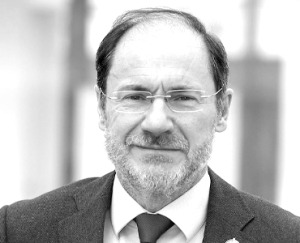
• Prof. Jaume Armengou, Decision Analysis, IESE Business School, Director Académico del Encuentro
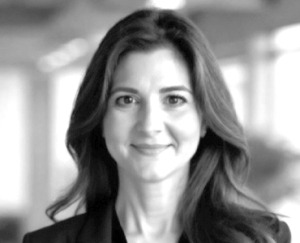
• Prof. María Dolores Esteban, Dean, College of Civil Engineers (Roads, Canals and Ports), Madrid Regional Branch |
| 09:35-10:20 |
OPENING SESSION
The Decade of Decisions: Infrastructure, Welfare and Competitiveness in Spain and Europe
We’re living at a time when infrastructure decisions cannot wait. We need clarity about why this decade is so critical: converging structural tensions, including limitations on fiscal space, the energy transition, urban concentration, demographic aging, logistical vulnerability and climate pressure, make it necessary to act with strategic vision and a sense of urgency.
More than a diagnosis, we want to establish an agreement at this industry meeting designed to transform priorities into real decisions. The goal is to give participants a clear road map that indicates the supervisors, deadlines and metrics that allow progress to be made from day one.
• Prof. Gonzalo Fernández, Member of the Governing Board, College of Civil Engineers (Roads, Canals and Ports), Madrid Regional Branch
• Prof. Jaume Armengou, Decision Analysis, IESE Business School |
| 10:25-11:30 |
PANEL I
Making It Work Tomorrow: Transportation Reliability and System Coordination
Mobility and transportation are the backbone of a country’s daily operations. We’ll analyze how system reliability can be improved in terms of operation and maintenance, not based simply on construction, and we’ll identify decisions that will have an impact in the next 12-18 months.
Current challenges include coordination between different public authorities, operators and supply chains; efficient incident management; and modernization priorities that make a real difference. We therefore need a systemic vision that leads to better operations, greater predictability and a direct impact on users and competitiveness.
• Sergio Vázquez, President, INECO
• Julián Núñez, President, SEOPAN
• Alfonso Sánchez, CEO, Empresa Municipal de Transportes de Madrid (EMT)
Moderator: Prof. M.ª José Rodríguez Largacha, Member of the Governing Board, College of Civil Engineers (Roads, Canals and Ports), Madrid Regional Branch |
| 11:30-12:10 |
Coffee-Break |
| 12:10-13:15 |
PANEL II
Uninterrupted Critical Services: Water and Energy Make up the Backbone
Water and energy supply support all other industries. Based on the dual approach of water and energy, we aim to highlight the shared challenges of service continuity, asset modernization and decisions that are often postponed due to their complexity or the lack of consensus.
Infrastructure must be perceived as a strategic asset: Where are the system weaknesses? In the network, operation, interconnection, storage, regulation or governance? Based on this analysis, there are bound to be specific levers that can increase reliability, even in scenarios with limited resources and tight deadlines.
• Blanca Losada, President, Fortia Energía and ex Presidenta-CEO, Unión Fenosa Distribución
• Yago Mijangos, Director for the Middle East, Australia, and Western Europe, FCC
• Luis Villarroya, President, Eptisa
Moderator: Prof. José Miguel Atienza, Director, Escuela de CICCP, UPM |
| 13:20-14:25 |
PANEL III
Connecting the City and Its Territory: A Holistic Perspective on Transport and Mobility Infrastructure
Cities are experiencing population growth and, consequently, a rise in demands—including increasing transport needs. The same applies at the territorial level, as a city is not an isolated entity; citizens’ mobility must always be considered within a broader regional context. Can we rethink how to design future transport and mobility systems by learning from the past and prioritizing livability and demand management? Beyond building additional infrastructure, issues such as maintenance, operations, emerging patterns, and operational decision-making require a discussion that blends strategic vision with professional pragmatism—avoiding abstractions and focusing on what can be effectively implemented.
• Pere Calvet, Director of ALSA Catalonia and Dean of the College of Civil Engineers-Catalonia Branch
• Concha Santos, President, ANCI
• José Manuel Vassallo, Catedrático de transporte de la Escuela de ICCP, UPM y director de Transyt
Moderator: Prof. Gonzalo Fernández, Member of the Governing Board, College of Civil Engineers (Roads, Canals and Ports), Madrid Regional Branch |
| 14:25-16:00 |
Networking Lunch |
| 16:00-17:05 |
PANEL IV
Key Proposals for Water and Energy Policy
Climate change is no longer a future event. It affects investment decisions, design standards and operating models. A rigorous approach must be taken to include risk criteria in water and energy infrastructure by identifying extreme scenarios, defining comparable priorities and realistically sequencing adaptation and mitigation measures.
The goal is to move from simply forecasting to creating resilience architecture: to agree on the minimum standards the country should require, to identify systemic risks that are still being underestimated and to translate them into specific projects that can be implemented in the short and medium term.
• Mariano González, CEO, Canal Isabel II
• Marisol Martín-Cleto, ex Directora General, Prointec and Senior Partner, Syntagma Partners
• Rafael Mateo, ex CEO, Acciona Energía
Moderator: Prof. Juan Luis López Cardenete, IESE Business School |
| 17:10-18:15 |
PANEL V
Bankable Projects, Sustainable Systems: Financing and Rules of the Game
All transformations require a clear, sustainable financial model. How to finance the level of service demanded by society must be addressed without ideologies or simplifications, as well as how to turn strategic priorities into projects that can actually attract financing.
Mechanisms such as concessions, public-private partnerships (PPP) and pay-per-use schemes based on the logic of incentive design and appropriate risk distribution will be analyzed as we review critical enablers such as regulatory stability, procurement quality, technical standards and impact metrics that generate confidence and attract investment.
• Nuria Haltiwanger, Directora de Inversiones de Infraestructuras, Grupo ACS y Presidenta y CEO, Iridium Concesiones de Infraestructuras
• Belén Marcos, President, VINCI Highways
• Juan Franco, President, Tecniberia
Moderator: Prof. Carles Vergara, Finance Department, IESE Business School |
| 18:20-18:50 |
CONCLUSIONS
Twelve Months to Change Course: Five Decisions, Supervisors and Monitoring
The meeting will end with an executive summary that identifies five key decisions that must be made in the coming months, including assigning supervisors and setting verifiable milestones for the first 90 days.
We want the meeting to be a turning point: an event where participants don’t merely talk, but define a specific agenda and agree on a monitoring mechanism to ensure continuity.
• Prof. Jaume Armengou, Decision Analysis, IESE Business School, Director Académico del Encuentro
• Prof. María Dolores Esteban, Dean, College of Civil Engineers (Roads, Canals and Ports), Madrid Regional Branch |
| 18:50-20:20 |
Spanish wine |