
UPCOMING EVENT
0Days0Hours0Minutes


UPCOMING EVENT
Infrastructure is a central pillar for a country’s competitiveness, social cohesion and citizens’ quality of life. In a context marked by energy transition, budgetary pressure and profound technological disruption, infrastructure management is a strategic priority for everyone.
The immediate challenge is clear: to guarantee reliable services, efficiently maintain and modernize assets, improve territorial and operational coordination, and professionalize risk management in critical industries such as transportation, water and energy. Operational excellence of infrastructure is no longer an aspiration. It’s the starting point.
At the same time, infrastructure must be prepared for the future by including risk and climate resilience criteria in design, harnessing the potential of data, AI and digital twins, using new materials, and moving toward more electrified, intelligent and sustainable systems.
Achieving this requires robust financing mechanisms, greater public-private collaboration, and innovation-driving regulation. The goal: to turn priorities into specific decisions based on supervisors, realistic deadlines and clear-cut metrics.
On May 12, we’ll hear from industry leaders who’ll address all these challenges and generate the discussion required to get down to work. It’ll be an essential day for those who want to move from vision to execution, and to lead the transformation required by tomorrow’s infrastructure.
HELP TO CREATE THE FUTURE OF YOUR INDUSTRY,
BECOME A PARTNER
Our co-organizer:

| 09:00 | Opening session The Decade of Decisions: Infrastructure, Welfare and Competitiveness in Spain and Europe We’re living at a time when infrastructure decisions cannot wait. We need clarity about why this decade is so critical: converging structural tensions, including limitations on fiscal space, the energy transition, urban concentration, demographic aging, logistical vulnerability and climate pressure, make it necessary to act with strategic vision and a sense of urgency. More than a diagnosis, we want to establish an agreement at this industry meeting designed to transform priorities into real decisions. The goal is to give participants a clear road map that indicates the supervisors, deadlines and metrics that allow progress to be made from day one. |
| PANEL I Making It Work Tomorrow: Transportation Reliability and System Coordination Mobility and transportation are the backbone of a country’s daily operations. We’ll analyze how system reliability can be improved in terms of operation and maintenance, not based simply on construction, and we’ll identify decisions that will have an impact in the next 12-18 months Current challenges include coordination between different public authorities, operators and supply chains; efficient incident management; and modernization priorities that make a real difference. We therefore need a systemic vision that leads to better operations, greater predictability and a direct impact on users and competitiveness. |
|
| PANEL II Uninterrupted Critical Services: Water and Energy Make up the Backbone Water and energy supply support all other industries. Based on the dual approach of water and energy, we aim to highlight the shared challenges of service continuity, asset modernization and decisions that are often postponed due to their complexity or the lack of consensus. Infrastructure must be perceived as a strategic asset: Where are the system weaknesses? In the network, operation, interconnection, storage, regulation or governance? Based on this analysis, there are bound to be specific levers that can increase reliability, even in scenarios with limited resources and tight deadlines. |
|
| PANEL III The City and Territory That Will not Fail: Mobility, Logistics and Demand In a context of accelerated urban development, new tourism dynamics, capillary delivery and the emergence of new forms of mobility, cities face a real risk of saturation. Can we learn to design future-ready transportation systems based on an approach that prioritizes livability and demand management? Besides merely building more infrastructure, it’s time to make operating decisions to avoid failures, including applying emerging patterns and smart flow design. This debate combines strategic vision with business acumen, avoids abstractions and focuses on feasible implementation. |
|
| PANEL IV Method-Based Resilience: Designing Today for Tomorrow’s Climate Climate change is no longer a future event. It affects investment decisions, design standards and operating models. A rigorous approach must be taken to include risk criteria in water and energy infrastructure by identifying extreme scenarios, defining comparable priorities and realistically sequencing adaptation and mitigation measures. The goal is to move from simply forecasting to creating resilience architecture: to agree on the minimum standards the country should require, to identify systemic risks that are still being underestimated and to translate them into specific projects that can be implemented in the short and medium term. |
|
| PANEL V Bankable Projects, Sustainable Systems: Financing and Rules of the Game All transformations require a clear, sustainable financial model. How to finance the level of service demanded by society must be addressed without ideologies or simplifications, as well as how to turn strategic priorities into projects that can actually attract financing. Mechanisms such as concessions, public-private partnerships (PPP) and pay-per-use schemes based on the logic of incentive design and appropriate risk distribution will be analyzed as we review critical enablers such as regulatory stability, procurement quality, technical standards and impact metrics that generate confidence and attract investment. |
|
| 18:00 | CONCLUSIONS Twelve Months to Change Course: Five Decisions, Supervisors and Monitoring The meeting will end with an executive summary that identifies five key decisions that must be made in the coming months, including assigning supervisors and setting verifiable milestones for the first 90 days. We want the meeting to be a turning point: an event where participants don’t merely talk, but define a specific agenda and agree on a monitoring mechanism to ensure continuity. |
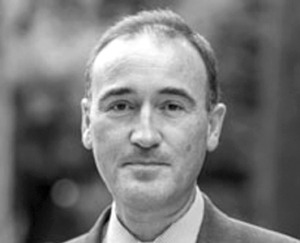
Academic Director
The Infraestructure Meeting will be held on IESE Madrid
The fees for this meeting:
On Campus: € 600
On Campus: € 500
On Campus: € 420
PAYMENT MUST BE MADE PRIOR TO PROGRAM ATTENDANCE